Glass plays an important role in modern architecture, interior decoration, and commercial construction. However, not all transparent glass products look or perform the same way.
Clear glass, low-iron glass, and tinted glass are three commonly used options. Although they may appear similar at first, differences in their composition, color, and optical properties make each suitable for different applications.
Understanding these differences can help architects, contractors, and glass buyers select the right material for their projects.
Key Differences at a Glance
Clear Glass: A versatile option with a slight green tint, suitable for general architectural and interior applications.
Low-Iron Glass: Offers higher transparency and a more neutral appearance, making it ideal for projects requiring excellent visual clarity.
Tinted Glass: Contains coloring agents that create different shades and help manage sunlight and glare.
1. Clear Glass: A Versatile Choice for Everyday Applications
Clear glass, also known as standard float glass, is one of the most widely used glass materials in construction and manufacturing.
It provides good transparency and a neutral appearance when viewed face-on. However, its natural iron content creates a slight green tint, which becomes more noticeable along the edges and in thicker glass panels.
Main Characteristics:
- Good light transmission
- Slight green appearance at the edges
- Versatile processing options
- Suitable for general architectural applications
Common Applications:
Windows, doors, furniture, glass partitions, mirrors, and other interior decoration projects.
Clear glass is often selected when standard transparency and cost-effective material solutions are the main priorities.
2. Low-Iron Glass: Higher Clarity and Color Accuracy
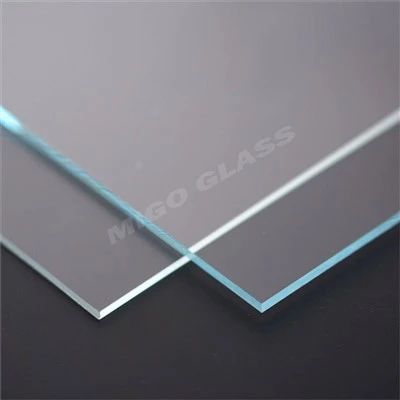
Low-iron glass is manufactured using raw materials with significantly reduced iron content.
Compared with standard clear glass, it has a much lighter edge appearance and allows more visible light to pass through.
One of its biggest advantages is better color neutrality. Objects viewed through low-iron glass appear closer to their natural colors without the noticeable green tint associated with standard clear glass.
Main Characteristics:
- Higher visible light transmission
- Reduced green tint
- Excellent visual clarity
- More accurate color presentation
Common Applications:
Glass balustrades, display cabinets, luxury storefronts, furniture, decorative glass, and solar applications.
Low-iron glass is particularly suitable for premium architectural projects where transparency and appearance are important purchasing considerations.
3. Tinted Glass: Color and Solar Control
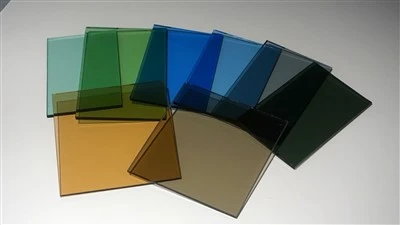
Unlike clear and low-iron glass, tinted glass contains coloring agents introduced during the manufacturing process.
Common colors include grey, bronze, blue, and green. These colors extend throughout the glass rather than being applied only as a surface finish.
Tinted glass can reduce visible light transmission and solar energy entering a building, depending on its color, thickness, and specific optical properties.
Main Characteristics:
- Available in different colors
- Reduced visible light transmission
- Helps manage glare and solar heat gain
- Provides additional architectural design options
Common Applications:
Building facades, office windows, commercial buildings, curtain walls, and decorative architectural projects.
Tinted glass is often selected for projects that require a balance between appearance, daylight control, and solar performance.
Clear vs. Low-Iron vs. Tinted Glass
| Feature | Clear Glass | Low-Iron Glass | Tinted Glass |
|---|---|---|---|
| Appearance | Slight green tint | Nearly colorless | Grey, bronze, blue, green |
| Transparency | Good | Very high | Varies by color |
| Light Transmission | Relatively high | Generally higher than clear | Generally lower |
| Color Accuracy | Slight green influence | More neutral | Colored appearance |
| Solar Control | Limited | Limited without additional coatings | Can reduce solar transmission |
| Main Advantage | Versatility | Optical clarity | Color and sunlight control |
Actual optical performance depends on glass thickness, composition, and any additional coatings.
Which Glass Should You Choose?
The right choice depends on the requirements of your project.
Choose clear glass for general construction, furniture, and interior applications where standard transparency is sufficient.
Choose low-iron glass for premium projects requiring excellent clarity, natural color presentation, and minimal green tint.
Choose tinted glass for architectural projects where color, glare reduction, and solar control are important considerations.
For larger commercial projects, buyers should also compare technical data such as visible light transmission, solar energy transmission, and glass thickness before making a final decision.
Finding the Right Glass for Your Project
Clear, low-iron, and tinted glass each offer different advantages. Understanding their differences helps buyers avoid selecting materials based on appearance alone.
MIGO Glass supplies a range of architectural glass products, including clear float glass, low-iron glass, and tinted glass. With customized sizes, thicknesses, and further processing options, MIGO Glass supports different requirements for international construction, interior decoration, and commercial projects.
Selecting the right glass starts with understanding how each material performs in its intended application.