
Find answers about glass selection, custom processing and ordering from MIGO Glass. We supply glass for architectural, shower, railing, sports, solar and greenhouse applications.
Choose a topic below, or request a quote for your project.
Q: Can MIGO Glass manufacture glass to custom sizes and drawings?
A: Yes. We supply glass cut to size and processed to project drawings, subject to the selected product and production limits. Processing options include edge finishing, holes, notches, cut-outs, tempering and laminating.
For shaped or processed panels, send dimensioned drawings showing the required details and tolerances. Cutting, drilling and edge processing for tempered glass must be completed before tempering.
Q: What information should I provide for a quotation?
A: Send your request through our inquiry page or email info@migoglass.com. Please include:
If your specification is incomplete, send the information you have and identify what still needs to be confirmed.
Q: What is the minimum order quantity? Can I order a small batch?
A: Please request an MOQ check for the specific product, size and processing required. Include the quantity for each panel type and whether the request is for a sample, replacement panel, trial order or regular production order. Small-batch availability and pricing need to be confirmed for the individual request.
Q: Can I request samples before placing an order?
A: Yes, you can submit a sample request for review. Please specify the glass type, sample dimensions, finish or coating, intended evaluation and delivery address. Confirm availability, sample charges, freight costs and preparation time before arranging the sample.
Q: How long does production and delivery take?
A: Lead time depends on the glass specification, processing, quantity and production schedule. Ask for the current production lead time with your quotation and confirm which approvals or payment conditions start that period.
Shipping and customs clearance add time beyond production. Include your destination and required arrival date so these can be considered separately.
Q: How is glass packed for export?
A: MIGO Glass offers export packaging for its glass products. The packaging arrangement should be confirmed for the panel dimensions, weight, transport method and unloading conditions. Include any requirements for crate size, panel identification or destination-specific packaging documentation in your inquiry.
Q: What should I do if glass arrives damaged?
A: Contact us promptly with your order reference, affected panel quantities and photos of the glass, packaging and package labels. Keep the packaging and delivery records available for review. Any claim deadline, responsibility and resolution should be checked against the agreed order and shipping terms.
Q: Can I request test reports or certification documents?
A: Please include the destination market, application and required standard in your inquiry. Ask us to confirm which documents are available for the exact product and specification before ordering. A report for one glass product or configuration should not be assumed to cover a different one.
Q: Do you supply glass only, or also hardware and complete systems?
A: Please state whether you need glass panels only, matching hardware or a complete system. The supply scope varies by product and should be itemized in the quotation. For shower and railing projects, provide the hardware or system details so the glass processing can be matched to the design. For padel courts, you can also inquire about complete court solutions.
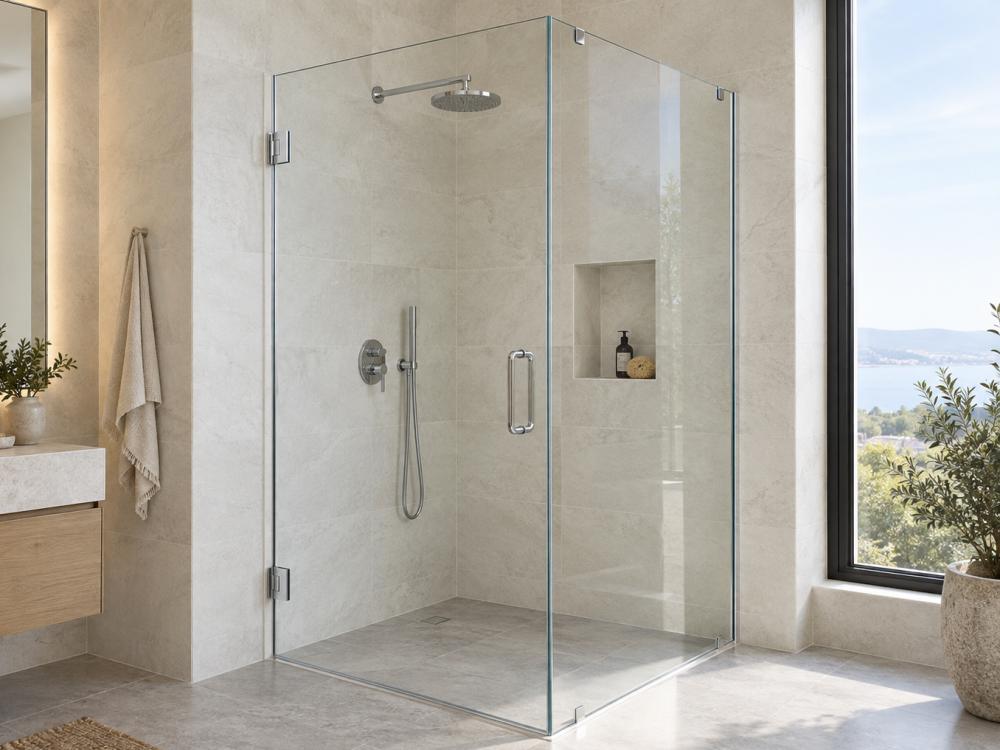
Q: What glass is used for shower doors and enclosures?
A: Tempered safety glass is commonly used for shower doors, screens and enclosures. It is stronger than comparable annealed glass and typically breaks into relatively small fragments. It can still break and cause injury, so correct specification and installation remain essential.
MIGO offers clear, low-iron, tinted, frosted, patterned and screen-printed options for different bathroom designs.
Q: What shower glass thicknesses are available?
A: Our shower glass range includes thicknesses in the 6–10 mm range, with thicker specifications such as 12 mm available for review. These are supply options, not a thickness recommendation for every enclosure.
The enclosure designer or system supplier should confirm the thickness based on panel size, framing, hinges or other hardware, support conditions and applicable safety requirements.
Q: Can shower glass be supplied with holes and cut-outs?
A: Yes. We can process shower glass with finished edges, hardware holes, notches and cut-outs to approved drawings. Specify hinge and handle details, hole locations, corner treatments and panel orientation before production. Tempered glass cannot be resized or drilled after tempering.
Q: Should I choose clear or low-iron shower glass?
A: Choose standard clear glass for a conventional transparent appearance. Choose low-iron glass when reducing the green tint is a priority, especially alongside light-colored finishes. For privacy, consider frosted, patterned or printed glass instead of relying on the choice between clear and low-iron glass.
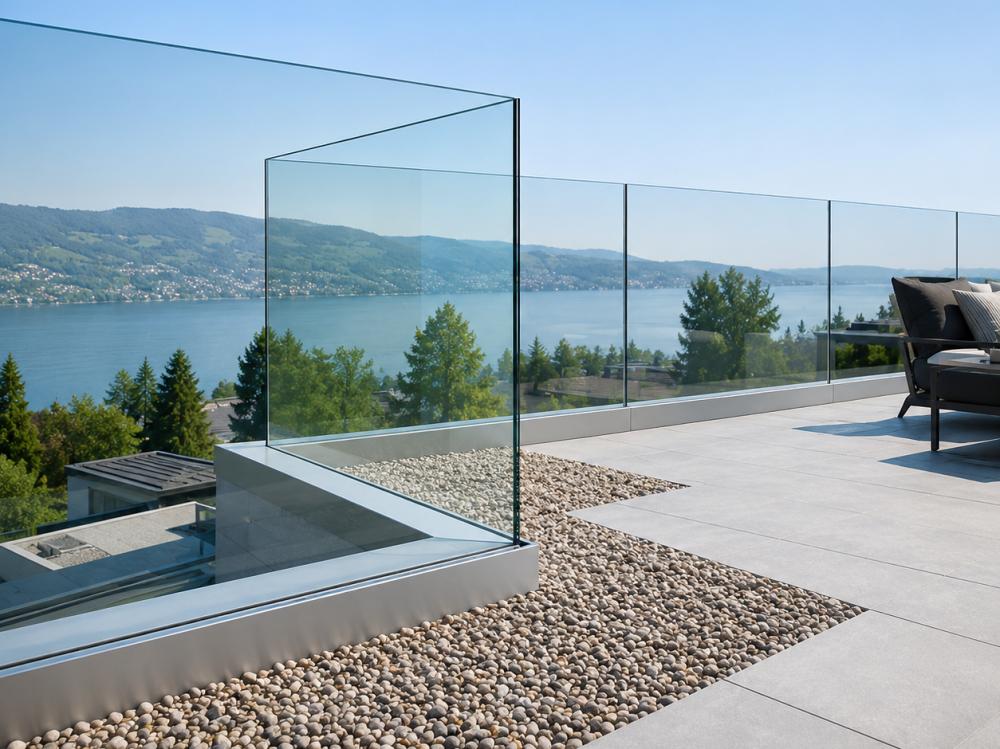
Q: Should railing glass be tempered or laminated?
A: Tempering and laminating describe different processes, and a panel can be both tempered and laminated. Tempering increases strength and changes breakage behavior; laminating bonds glass layers with an interlayer that helps retain fragments after breakage.
The railing designer should specify the glass construction for the complete system, including support conditions, loads and required performance after breakage.
Q: What is laminated tempered glass?
A: Laminated tempered glass consists of two or more fully tempered glass panes bonded with one or more interlayers. The interlayer helps retain broken glass fragments.
Fragment retention alone does not establish the railing's load-bearing performance after breakage. That performance depends on the glass build-up, interlayer, fixings and complete system design.
Q: How should I specify railing glass thickness?
A: For laminated glass, specify the thickness and treatment of each pane, plus the interlayer type and thickness. Total thickness alone is not a complete specification.
Use the build-up approved by the railing designer, based on panel dimensions, fixing method and design loads. Send the system drawings with your inquiry so manufacturing requirements can be reviewed.
Q: Can railing panels be made with custom shapes and fixings?
A: Yes. We can review drawings for custom panel shapes, finished edges, holes and cut-outs. Include the fixing details, panel orientation and required tolerances. All fabrication details for tempered panes must be finalized before tempering.
Explore laminated glass options
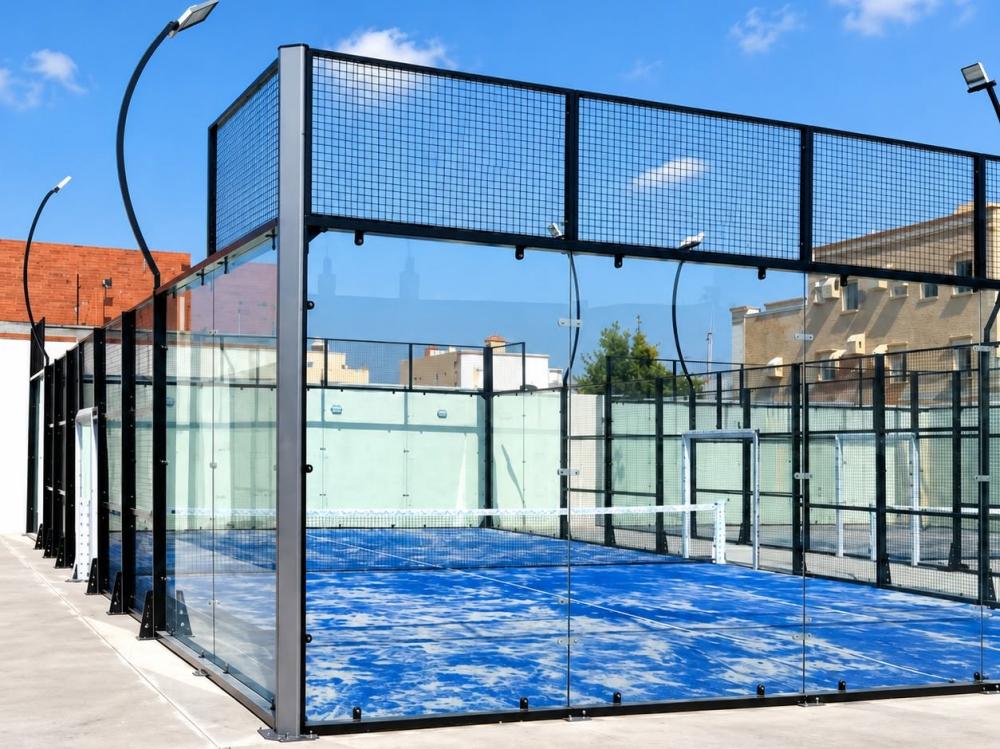
Q: What glass types and thicknesses does MIGO offer for padel courts?
A: MIGO offers 10 mm and 12 mm tempered safety glass for padel court projects. The specification must match the court structure, panel dimensions, fixing arrangement and site conditions. Available thicknesses should not be treated as interchangeable without confirmation from the court designer.
Q: What is the difference between standard and panoramic court glass?
A: The main difference is the court structure and panel support arrangement. Panoramic designs aim to reduce visual obstruction, which can change the glass dimensions, fixing details and structural requirements. The term "panoramic" alone does not define a glass thickness or hole pattern.
Q: Can padel glass be supplied with custom holes and edge finishes?
A: Yes. Processing can include polished edges and installation holes, including countersunk holes where specified. Send drawings showing hole positions, diameters, countersink details and panel orientation. These details must be confirmed before tempering.
Q: How do I order replacement padel court glass?
A: Provide the panel dimensions, thickness, hole pattern, edge details and original drawings if available. Photos of the panel location, fixings and court structure are useful supporting information, but do not replace accurate measurements. The finished tempered panel cannot be cut or drilled to fit on site.
Q: Can I request a complete padel court solution?
A: Yes. In addition to glass panels, MIGO offers inquiries for complete court solutions including frames, artificial turf and lighting. Share the court type, quantity, location and requested components. Confirm the exact supply scope and any installation requirements in the quotation.
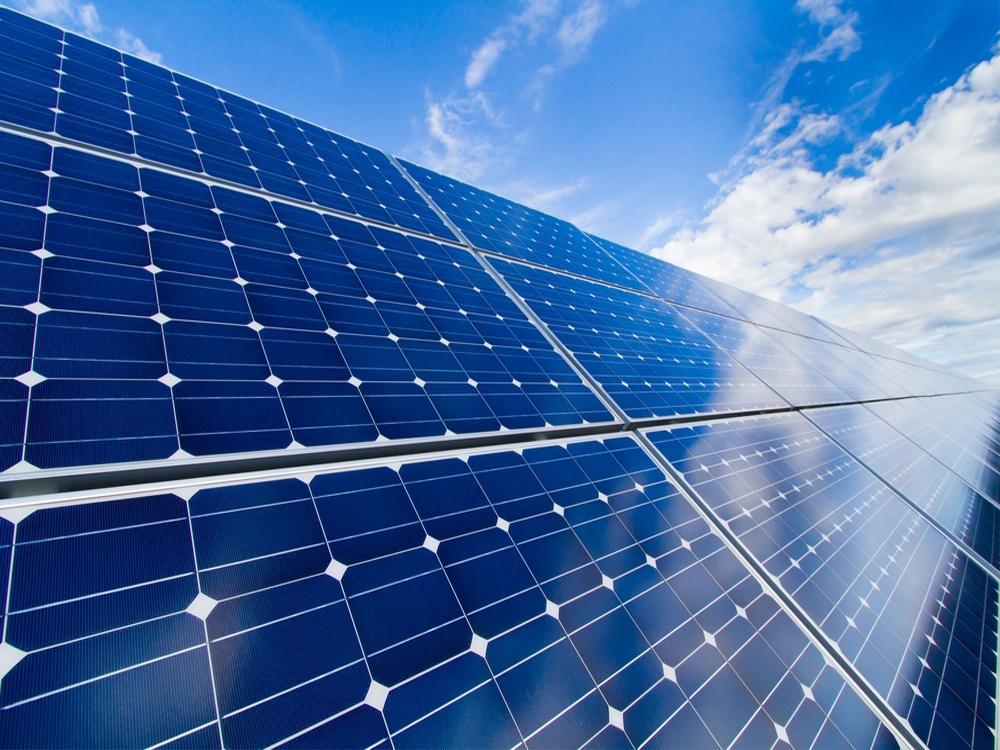
Q: What is solar glass, and can ordinary glass replace it?
A: Solar glass is specified for photovoltaic or other solar energy applications, where optical performance and compatibility with the product design are important. Ordinary architectural glass should not be substituted solely because its size and thickness match. The module specification must also address composition, surface treatment, mechanical performance and manufacturing compatibility.
Q: What solar glass options can I inquire about?
A: MIGO's solar glass range includes float solar glass, patterned solar glass and AR-coated solar glass. Send the module specification to identify a suitable option, including dimensions, thickness, glass treatment and required optical properties.
Q: Why is low-iron glass used in solar applications?
A: Reduced iron content can improve light transmission compared with conventional clear glass, allowing more light to reach the solar cells. Compare optical data for the specified glass thickness, surface and coating rather than relying on the low-iron designation alone.
Q: What is AR-coated solar glass?
A: AR means anti-reflective. The coating is designed to reduce surface reflection and improve light transmission. For purchasing, specify the required optical performance, coating arrangement and durability requirements. Performance should be evaluated for the intended module design.
Q: What technical details are needed for a solar glass inquiry?
A: Along with dimensions and quantity, provide the glass thickness, surface texture, heat treatment, coating requirements, edge processing and tolerances. Include the module application, required optical data and any testing or documentation requirements. A technical specification sheet is helpful for reviewing compatibility.
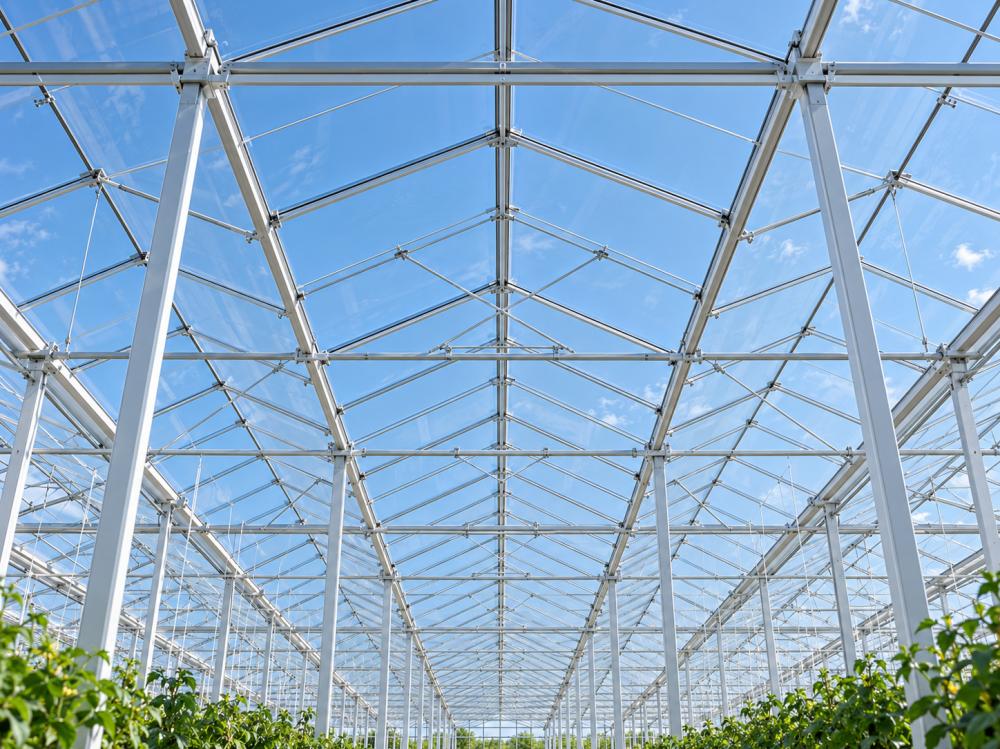
Q: What glass options are available for commercial greenhouses?
A: Options include clear and diffuse greenhouse glass, with low-iron compositions and tempered configurations depending on the product. Choose the optical properties for the crop and growing conditions, and have the greenhouse designer confirm the structural specification.
Q: What is the difference between clear and diffuse greenhouse glass?
A: Clear glass transmits light with relatively limited scattering. Diffuse glass scatters incoming light to help distribute it more evenly within the greenhouse. The suitable choice depends on crop type, climate, greenhouse design and growing strategy; higher diffusion is not automatically better for every project.
Q: Why choose low-iron greenhouse glass?
A: Low-iron glass can improve light transmission compared with conventional clear glass. For greenhouse selection, consider transmission together with diffusion and any coating, rather than judging by visual clarity alone. Request optical data for the specific product being considered.
Q: Is tempered glass suitable for greenhouse roofs and walls?
A: Tempered glass can be used where the greenhouse design calls for its strength and breakage characteristics. Suitability for a particular roof or wall depends on panel dimensions, supports, environmental loads and the project's safety requirements. Tempering alone does not determine the correct glass thickness.
Q: What should I send for a commercial greenhouse glass inquiry?
A: Provide the glazing drawings, panel sizes, thickness, quantities and roof or wall application. Include the greenhouse location, crop type and any specified light transmission, diffusion or coating requirements. If the designer has already approved a glass specification, send it with the inquiry.
Send your specifications or drawings to MIGO Glass for a quotation. Use the quotation checklist above to include the information needed for your product, and highlight any details that still need confirmation.
Email: info@migoglass.com
