The History of Padel Courts
Padel started in Mexico in 1969. A man named Enrique Corcuera wanted a small sports area for his family. He mixed tennis and squash, then built the first padel court in his backyard. His friends loved it, and the sport soon became popular in Mexico.
In the 1970s, padel came to Spain. Spanish tourists went to Mexico, fell in love with padel, and brought it back home. At first, only a few small courts were built in resorts. But more and more people tried it, so it got popular fast. By the 1990s, Spain had thousands of padel courts. It became one of the most loved sports there.
In the 2000s, padel spread across Europe. France, Italy and Germany started building courts. Local clubs also began holding small games. In 2010, the International Padel Federation (IPF) was set up. It wanted to make padel popular all over the world. This made padel more famous. More countries built courts and held international competitions.
Today, padel is one of the fastest-growing sports worldwide. Europe has over 50,000 padel courts, and the number is still going up. It's not just a hobby anymore. Professional players have careers, and big brands sponsor padel events. From a small backyard court in Mexico, padel has become a global sport loved by millions.
Tempered Glass vs. Laminated Glass for Padel Courts
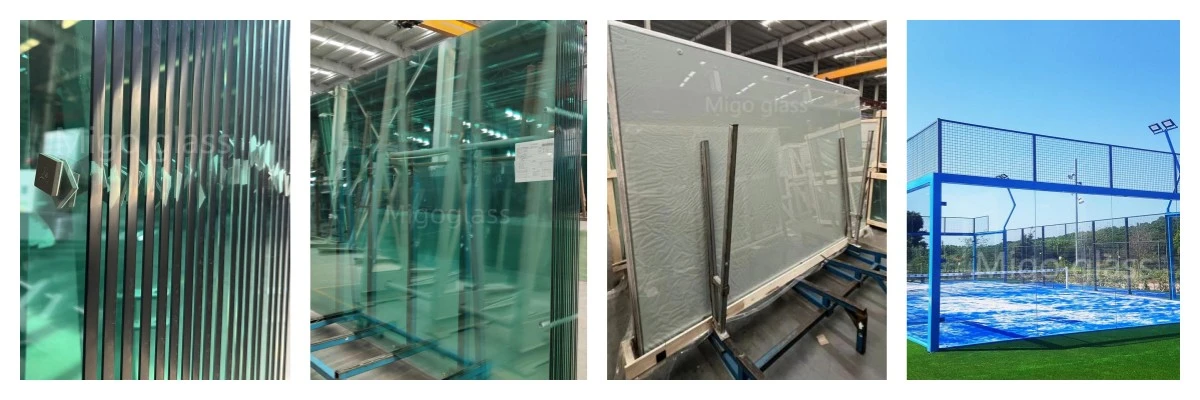
Both tempered glass and laminated glass are used for padel courts. But each has its own advantages. Here's a clear comparison:
Advantages of Tempered Glass
- Strong: It's hard and can take hardball hits without breaking easily.
- Safe when broken: If it breaks, it turns into small, round pieces. They won't cut players.
- Good light: It lets lots of sunlight in. The court stays bright for games.
- Cheaper: It costs less than laminated glass. Saves money for builders.
- Easy to get: It's a common glass. Easy to buy and delivered quickly.
Advantages of Laminated Glass
- Very safe: If it breaks, pieces stick to the plastic film inside. They won't fall and hurt people.
- Quiet: Blocks outside noise better. Makes the court more peaceful.
- Good insulation: Keeps the court cool in summer and warm in winter. More comfortable.
- UV protection: Stops harmful sun rays. Protects players' skin.
- Long-lasting: Resists scratches and damage. Lasts longer outdoors.
Advantages of Migo Glass
Migo Glass is a top choice for padel court builders. It has two big advantages: strict quality checks and full accessory supply.
Strict Glass Quality Checks
Migo Glass takes quality very seriously. Every piece of glass goes through many checks before sale. First, workers check for bubbles or cracks when making the glass. Then, they test its strength with special tools. This makes sure it can handle padel ball hits. They also check the size and thickness to fit standard padel courts. For tempered glass, they test if it breaks into safe pieces. For laminated glass, they check if the film sticks well. Only glass that passes all checks is sent to customers. This means Migo Glass rarely has quality problems. Builders don't need to worry about replacing bad glass later.
Padel Court Accessory Supply
Migo Glass doesn't just sell glass. It also provides all parts needed for padel courts. These include glass connectors, frames, and even small things like screws. Customers don't need to go to different shops. They can buy everything from Migo Glass in one order. This saves a lot of time. Builders don't have to spend hours looking for matching parts or wait for multiple deliveries. Migo Glass makes sure the parts fit its glass perfectly. This makes installation easier and faster. For busy builders, this one-stop shopping makes the whole process smoother. It helps them finish projects on time.