Padel Court Glass: More Than a "Wall"
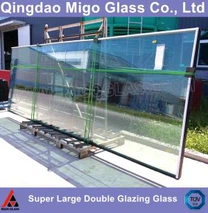
A padel court is an enclosed space. Glass needs to be installed around it and in some parts of the top. This glass is not just a simple partition material. It is a key facility to ensure the sport can be played.
From the perspective of rules, padel allows players to hit the ball against the glass and then return it. So the bounce performance of the glass directly affects the game's rhythm. If the glass is not elastic enough or its surface is uneven, the ball's path will deviate. This ruins the fairness of the game.
In terms of safety, standard court glass must be 10-12 millimeters thick. It can withstand impacts from players running at high speed. It also prevents the ball from breaking through and flying out of the court. You should know that a padel ball can reach speeds of over 80 kilometers per hour. Ordinary glass can never meet this protective need.
Besides, transparent glass lets spectators outside clearly watch the game. This is also an important condition for commercial courts to attract customers and hold events. It can be said that without qualified glass facilities, padel cannot be played at all.
Tempered Glass vs. Laminated Glass: Choose Based on Court Environment
There are two main types of glass for padel courts on the market: tempered glass and laminated glass. They have different properties. You need to choose the right one based on the court type and usage environment.
Tempered glass goes through a high-temperature quenching process. Its hardness is three times that of ordinary glass. It is strong against impacts. When it breaks, it splits into small, blunt particles. These won't form sharp shards, which greatly reduces the risk of injury.
It is suitable for indoor courts or semi-enclosed commercial courts. These places have a lot of people and are used frequently. The glass is easy to be hit repeatedly by balls or accidentally touched by players. Tempered glass's durability and safety are a big advantage here. For example, padel courts in city sports centers receive dozens of groups of players every day. Tempered glass can reduce damage from collisions and lower replacement costs later.
Laminated glass is made by bonding two layers of glass with a layer of polyvinyl butyral (PVB) film at high temperature. Even if it breaks, the shards will stick tightly to the film and won't fall off. This feature makes it the first choice for outdoor open-air courts.
Outdoor environments mean the glass has to stand up to bad weather like heavy rain, strong winds, and hail. Laminated glass is better at resisting wind pressure and impacts. Also, if broken glass falls from an open-air court, it might hurt passers-by or damage nearby facilities. Laminated glass solves this problem perfectly. Some high-end courts use "tempered + laminated" composite glass. It has both durability and safety, but it costs more.

Artificial Grass Surfaces: The "Foot Feel" That Customers Care Most About
Besides glass, floor materials are what customers ask about most. With its overall advantages, artificial grass is chosen for more than 90% of padel courts.
Compared with natural grass, artificial grass has obvious advantages. First, it is durable. High-quality artificial grass is made of polyethylene (PE). Its grass blade density is over 16,000 stitches per square meter. It can handle intensive use of more than 10 hours a day. Its service life is 5-8 years, much longer than natural grass's 2-3 years.
It has low maintenance costs. Natural grass needs regular watering, fertilizing, and trimming. It also has to deal with pests and diseases. The annual maintenance cost is over 10,000 yuan per mu. But artificial grass only needs to be cleaned of garbage and dust every week, and rinsed once a month. It is more economical in the long run.
Its performance is stable. Whether it's sunny or rainy, artificial grass keeps stable elasticity and friction. It doesn't get muddy like natural grass on rainy days, which won't affect the game.
In addition, professional padel court artificial grass has a 20-30 millimeter cushion layer. It can absorb impact during sports and reduce the risk of injuries to knees, ankles and other joints.
However, when buying, customers should check the wear resistance and environmental protection of the grass blades. They should choose products that pass SGS testing to ensure safe use.