Low-E glass is a coated glass with a high reflectivity (more than 80%) for far infrared rays with a wavelength range of 4.5 to 25 microns. It is made by coating a low-E coating of metal or metal oxide film on the surface of high-quality float glass, making it reflective to far infrared rays. It can effectively block the heat flow radiation from high-temperature field to low-temperature field, and effectively prevent the heat energy from entering the room in summer and the heat energy from leaking out in winter, with a two-way energy-saving effect.
Low-E glass is the abbreviation of Low-Emissivity in English. Low-E glass is a metal film or metal oxide film containing one or two or even multiple layers of film system coated on the glass surface by physical or chemical methods to reduce energy absorption or control indoor and outdoor energy exchange, ensure the comfort of life and work, and achieve the purpose of environmental protection and energy saving.
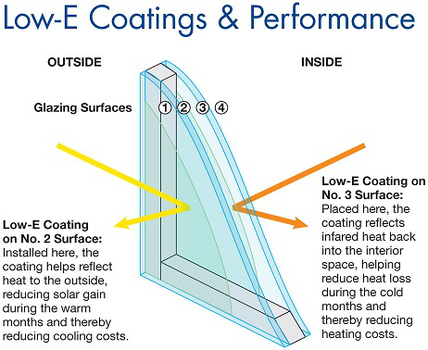
In architectural applications, the use of Low-E glass can achieve the effect of "warm in winter and cool in summer", with excellent heat insulation and thermal insulation performance. Low-E glass is a member of the coated glass family. Its widespread application began in developed countries in Europe and the United States in the 1990s. This glass can reduce the heat transfer caused by the temperature difference between indoor and outdoor.
Low-E glass performance
Low-E glass has the characteristics of low heat transfer coefficient and infrared reflection. Its main function is to reduce the radiation energy transfer of far-infrared rays indoors and outdoors, and allow solar radiation to enter the room as much as possible, thereby maintaining the indoor temperature and saving heating and air-conditioning costs. This product has a high visible light transmittance, and the color of its reflected light is lighter and almost difficult to see. Therefore, it is mostly used in cold areas at mid- and high latitudes. Properly control the transmittance of Low-E glass so that it can reflect part of the solar radiation and reduce the transfer of indoor and outdoor thermal radiation energy, thus forming a window that isolates radiation energy; this Low-E glass product has moderate visible light transmittance, and the color of its reflected light is mostly light blue, which has a certain decorative effect. Therefore, this product has stronger applicability and a wider range of selection, and can be widely used in high, mid- and low-latitude areas; it also has the function of blocking external heat from entering the room in summer.
Low-E glass is a new generation of coated glass that can let outdoor solar energy and visible light pass through like float glass, and reflect the secondary radiation heat of objects back like an infrared reflector. It can control sunlight, save energy, control heat and improve the environment when used in any climate environment.
Insiders also call it constant temperature glass: no matter how much the temperature difference between indoor and outdoor is, as long as low-E glass is installed, the indoor air conditioning cost can be kept warm in winter and cool in summer forever, that is, heat energy can be prevented from entering the room in summer and heat energy can be prevented from leaking in winter, with a two-way energy-saving effect.
It should be noted that in addition to affecting the ultraviolet light and shading coefficient of the glass, low-E glass will also show slightly different colors on the reflective surface of the glass when observed from a certain angle.
Low-E glass is widely used in many foreign countries, while the penetration rate of Low-E glass in China is only 2%. At present, the application of Low-E glass in my country is mainly in the public decoration market, and the proportion of the civilian market is relatively small. China's Low-E glass production lines are mainly concentrated in large enterprises, and the market share of the leading enterprises in the industry exceeds 50%.