


There were more disruptions in the freight market in July-including fires in Canada, floods in Europe, typhoons in China, and virus outbreaks in Vietnam and elsewhere.
As the shipping season heats up, these natural disasters have put additional pressure on the already stretched industry.
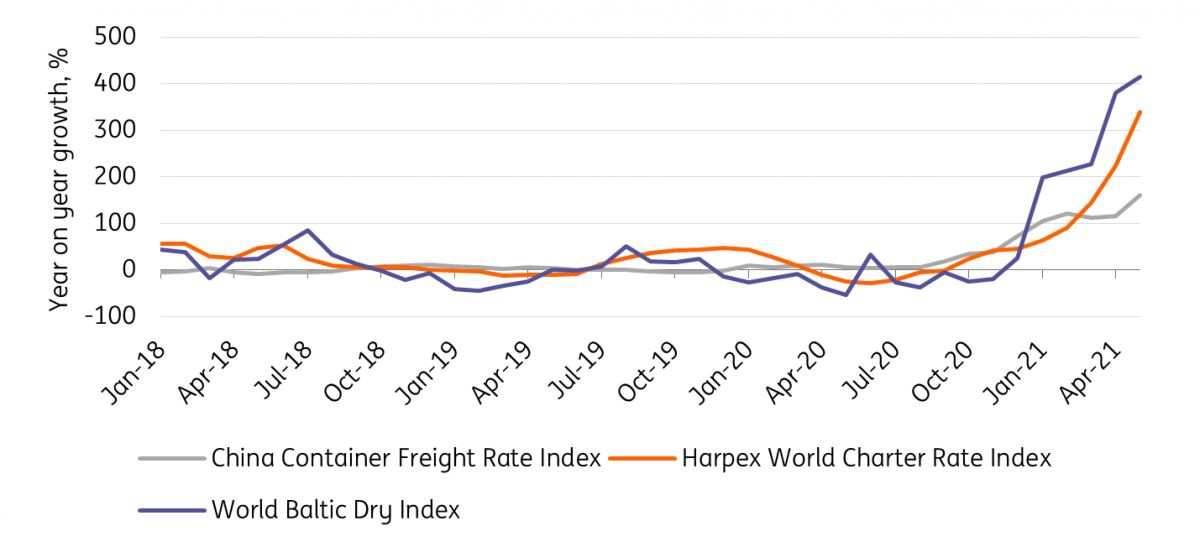
The overall freight rate continued to climb, reaching US$10,174/FEU, an increase of 466% compared to July last year.
Consumers’ high demand for imports has driven trans-Pacific freight rates to record highs:
-The freight rate on the West Coast of Asia reached US$18,346/FEU, which was more than 6 times the amount a year ago.
-The Asian American East Coast price climbed to US$19,620/FEU, an increase of 487% from July last year.
-Prices from Asia to Northern Europe have soared 22% since the end of June to USD 13,706/FEU, which is more than two and a half times the level at the end of 2020
Transatlantic freight rates also increased in July:
-Prices from Europe to East Coast of North America rose 6% to US$6,013/FEU, three times the level of a year ago.
-Freight from Europe to East Coast of South America soared 56% to US$3,311/FEU, almost four times the level of last year.
Basically, freight is really expensive, but because there is almost no capacity, many importers and exporters are willing to pay a premium in addition to these rates, just to keep the goods in transit. As consumer demand is strong and inventory levels are still lagging, prices will not drop in the short term.