Tempered glass and laminated glass are two of the most common types of safety glass. Both improve safety compared with ordinary annealed glass, but they differ in manufacturing process, breakage behavior, performance, and applications.
What Is Tempered Glass?
Tempered glass, also called toughened glass, is heat-treated to increase its strength. During production, the glass is heated and rapidly cooled, creating compressive stress on the surface.
Main Features:
- Higher impact and bending strength than ordinary glass
- Better resistance to thermal stress
- When broken, it shatters into small, relatively blunt pieces
- Easy to clean and widely used in residential and commercial applications
Common Applications:
Shower doors, shower enclosures, glass doors, partitions, windows, furniture, and some railing systems.
What Is Laminated Glass?
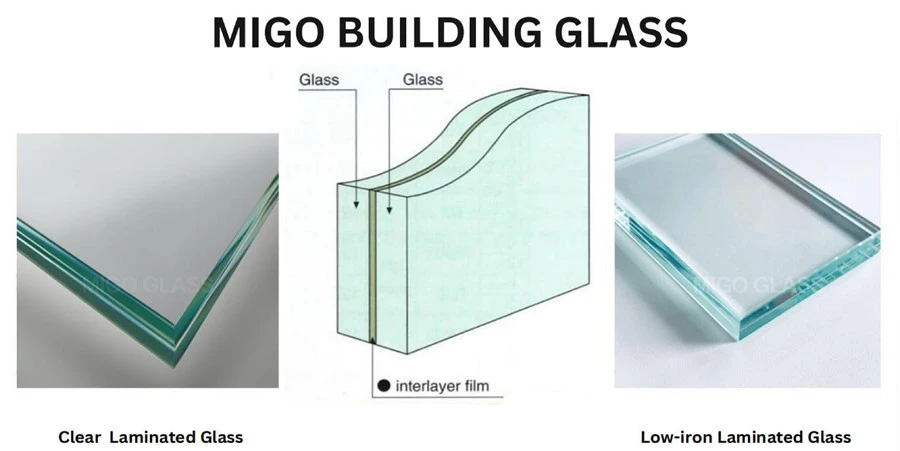
Laminated glass is made by bonding two or more glass panes together with an interlayer such as PVB or SGP.
When laminated glass breaks, the fragments usually remain attached to the interlayer instead of falling apart.
Main Features:
- Better post-breakage retention
- Improved security and penetration resistance
- Good sound insulation
- Helps reduce UV transmission
- Available with clear, tinted, low-iron, tempered, or heat-strengthened glass
Common Applications:
Glass railings, balustrades, skylights, canopies, facades, windows, doors, and security glazing.

Tempered Glass vs. Laminated Glass
| Feature | Tempered Glass | Laminated Glass |
|---|---|---|
| Structure | Single heat-treated pane | Two or more panes with interlayer |
| Strength | High | Depends on construction |
| Breakage | Small fragments | Fragments stay attached |
| Security | Moderate | Better |
| Sound Insulation | Standard | Better |
| UV Protection | Limited | Better with PVB |
| Cost | Generally lower | Generally higher |
| Typical Use | Showers, doors, partitions | Railings, canopies, skylights |
Which One Should You Choose?
Choose tempered glass when you need high strength, thermal resistance, safe breakage, and a cost-effective solution. It is especially suitable for shower enclosures and interior glass.
Choose laminated glass when post-breakage safety, security, sound insulation, or glass retention is more important. It is commonly used for glass railings, balustrades, skylights, and canopies.
For demanding architectural projects, tempered laminated glass combines the strength of tempered glass with the retention performance of laminated glass.
The right choice depends on the application, glass size, thickness, fixing system, structural load, and local building regulations.