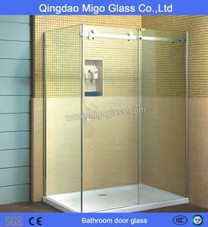
Laminated glass, also known as safety glass, is a type of glass that is manufactured by bonding two or more layers of glass together with a flexible interlayer, typically made of polyvinyl butyral (PVB). This interlayer holds the glass together in the event of breakage, providing increased safety and security compared to traditional annealed glass.

The process of creating laminated glass involves placing the interlayer between the glass layers and subjecting the assembly to heat and pressure in a process called lamination. This results in a strong, durable composite material that offers a range of benefits and applications.
One of the key advantages of laminated glass is its safety features. When the glass is subjected to impact, the interlayer holds the broken pieces together, preventing them from scattering and reducing the risk of injury. This makes laminated glass an ideal choice for applications where safety is paramount, such as in automobile windshields, building facades, and overhead glazing.
In addition to safety, laminated glass also offers enhanced security benefits. The bonded layers provide resistance against forced entry, making it more difficult for intruders to penetrate the glass. This makes laminated glass a popular choice for use in windows and doors in residential and commercial buildings, as well as in high-security facilities such as banks and government buildings.
Another important feature of laminated glass is its ability to block out harmful ultraviolet (UV) radiation. The interlayer in laminated glass can be formulated to effectively filter out UV rays, helping to protect interior spaces and occupants from the damaging effects of prolonged sun exposure. This makes laminated glass a suitable option for use in windows and skylights, particularly in regions with high levels of sunlight.
Furthermore, laminated glass offers sound insulation properties, helping to reduce noise transmission through windows and other glazed surfaces. This can contribute to a more comfortable and peaceful indoor environment, making it an attractive choice for use in residential buildings, offices, and other spaces where noise control is important.
The versatility of laminated glass extends to its decorative potential. The interlayer can be customized with various colors, patterns, and textures, allowing for creative design possibilities in architectural applications. Laminated glass can be used to create visually striking features such as decorative partitions, balustrades, and signage, adding aesthetic value to interior and exterior spaces.
The Process of lamianted glasss:
Cutting → cleaning → drying → Laminating→ heating → Roller pressure → Reheating → Reroller pressure → high temperature and high pressure in autoclave (Edging, cleaning)→ Inspection
What is the function of the auto-clave? What is the Composit chamer(lamination room)?
The function of the "composite chamber" in sandwich production is to laminate two or three pieces of glass together with one or more layers of PVB film. A certain temperature, humidity and cleanliness are required in the lamination room.
The role of the autoclave is to produce a suitable temperature, pressure and time to:
A. Solve the residual air in the degassing process of laminated glass;
B. Allow the viscous flow of the PVB film between the interlayers, and finally make the glass and PVB film stick together;
C. Prevent the heat transfer medium from penetrating into the edge of the sandwich; After heat, pressure and the right time, laminated glass will have good transparency and excellent performance.

What is the boil test for lamninated glass?
The laminated glass sample is vertically immersed in a tank at 66±3 ° C, and after three minutes, the sample is quickly removed from the tank and immediately placed in another tank of boiling water for 2 hours. The placement time is calculated from when the water temperature reaches boiling water again after the sample is put in. The purpose of the boiling test is to evaluate the stability of laminated glass under high temperature and humidity conditions.
What is degumming? How is degumming caused?
Qualified laminated glass is a tight bond between PVB film and glass, and is made of safety glass with good transparency and excellent performance after high temperature and pressure. When the laminated glass is degummed, the PVB film is separated from the glass and there is a gap. Especially on the edges, it tends to appear. This degumming phenomenon is caused by the glass edge being exposed to a humid environment for a long time and caused by moisture and atmospheric weathering.
What is the application for laminated glass?
Laminated glass is suitable for doors, Windows, ceilings, floors and partitions of buildings because of its high impact strength and safety. Skylights in industrial buildings; A shop window; Kindergartens, schools, gymnasiums, private houses, villas, madhouses, banks, jewelry stores, post offices, etc. keep the doors and Windows of the one-year-old buildings of your company.