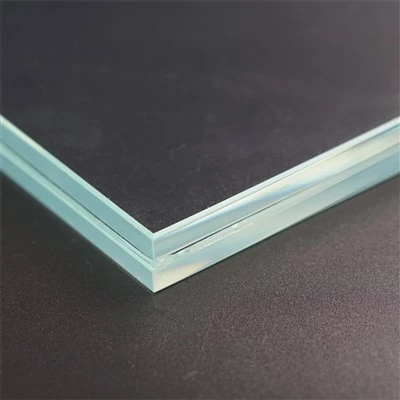
When purchasing laminated glass, buyers often focus on the total thickness of the finished panel. However, laminated glass is a multi-layer product, and its performance depends on how the glass layers and interlayer are combined.
The same overall thickness can be achieved with different glass and interlayer configurations. These configurations may not provide the same mechanical, optical, or processing characteristics.
For architects, contractors, distributors, and project buyers, understanding the relationship between glass thickness and interlayer thickness can help when reviewing specifications for architectural laminated glass.
What Makes Up Laminated Glass?
Laminated glass normally consists of two or more glass sheets bonded together with an interlayer.
A basic specification may include:
- Glass thickness
- Interlayer type
- Interlayer thickness
- Number of glass layers
- Glass type
- Heat-treatment condition
For example, a laminated glass specification should identify the individual glass layers and interlayer rather than only stating the total finished thickness.
This gives the manufacturer a clearer understanding of the required product configuration.
Why Glass Thickness Matters
The glass layers provide most of the basic rigidity and load-carrying characteristics of the panel.
Increasing the thickness of the glass can change the stiffness, weight, and overall behavior of the laminated panel.
However, the appropriate glass thickness depends on factors such as panel dimensions, support conditions, wind loads, impact requirements, and the intended application.
A glass railing, skylight, facade panel, and interior partition may therefore require very different glass configurations.
What Does the Interlayer Do?
The interlayer bonds the glass layers together and helps retain glass fragments if the glass breaks.
Its properties also influence the behavior of the laminated panel.
Different interlayer materials and thicknesses can provide different levels of stiffness, adhesion, acoustic performance, appearance, and post-breakage behavior.
This is why buyers should specify the interlayer type and thickness instead of treating all laminated glass as the same product.
Does a Thicker Interlayer Always Mean Better Performance?
Not necessarily.
Increasing interlayer thickness may provide specific advantages depending on the application, but it does not automatically make every laminated glass configuration suitable for a particular project.
The final performance depends on the complete construction, including glass thickness, interlayer material, panel dimensions, support conditions, and installation method.
For structural or demanding applications, the required configuration should be determined according to project calculations and applicable standards.
Glass and Interlayer Should Be Evaluated Together
Consider a laminated glass panel as a complete system rather than two independent specifications.
A thicker glass layer may change the stiffness and weight of the panel, while a different interlayer can change its bonding and post-breakage characteristics.
Changing one component may therefore affect the overall behavior of the finished product.
For this reason, buyers should avoid changing glass thickness or interlayer thickness independently after a project specification has already been approved.
Any significant change should be reviewed before production.
Thickness Also Affects Handling and Installation
Laminated glass can become heavy as panel thickness and dimensions increase.
For large architectural panels, weight can affect transportation, lifting equipment, installation methods, and supporting hardware.
The final glass build-up should therefore be considered together with the installation system.
This is particularly important for large glass railings, facades, canopies, and other applications where panels may need to be handled manually or with specialized equipment.
Optical Appearance Should Also Be Considered
Glass thickness and interlayer selection can influence the appearance of laminated glass.
Clear PVB, colored interlayers, low-iron glass, and other combinations can produce different visual results.
For large projects with multiple adjacent panels, consistency of glass type and interlayer specification is important.
Buyers may want to approve a physical sample before mass production when color, transparency, or visual appearance is a major project requirement.
What Should Buyers Specify?
When requesting a quotation for laminated glass, buyers should provide the complete build-up whenever possible.
Important information may include:
- Individual glass thickness
- Glass type
- Tempered or heat-strengthened glass
- Interlayer material
- Interlayer thickness
- Finished panel dimensions
- Edge processing
- Holes or cut-outs
- Quantity
- Intended application
- Applicable project standards
For complex projects, an approved glass schedule can help prevent different panels from being manufactured with inconsistent configurations.
Choosing the Right Laminated Glass Build-Up
There is no single glass and interlayer thickness combination suitable for every architectural project.
The correct specification depends on the application, panel size, support conditions, required performance, installation system, and relevant project standards.
For overseas buyers sourcing custom laminated glass, it is better to specify the complete glass build-up instead of ordering only by total thickness.
By evaluating glass layers and interlayer thickness together, buyers can communicate technical requirements more clearly and work with the manufacturer to produce laminated glass that matches the intended architectural application.