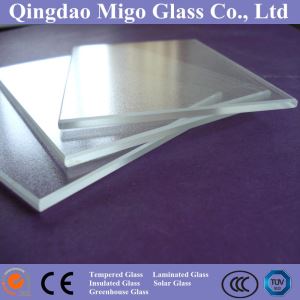
Laminated glass is widely used for glass railings and balustrades in commercial buildings, hotels, offices, balconies, staircases, and public facilities.
Because railing glass is part of a complete support system, buyers need to consider more than glass thickness. The glass build-up, interlayer, panel size, edge finish, and fixing method should all match the project requirements.
Why Use Laminated Glass for Railings?
One key advantage of laminated glass is its post-breakage behavior. When the glass breaks, the interlayer can help hold the fragments together.
This makes laminated glass suitable for many railing applications where retaining broken glass is an important consideration.
The exact glass configuration should be selected according to the railing design and applicable project requirements.
Choose the Right Glass Build-Up
Railing glass can use different combinations of glass thickness and interlayer.
Common specifications may include tempered or heat-strengthened glass combined with PVB or SGP interlayers.
The appropriate configuration depends on:
- Panel size
- Support conditions
- Fixing method
- Wind and design loads
- Indoor or outdoor application
- Project requirements
Buyers should therefore specify the complete glass build-up instead of providing only the total thickness.
PVB or SGP?
PVB is widely used in conventional laminated architectural glass, while SGP may be considered for applications requiring higher interlayer stiffness or specific structural characteristics.
For frameless railings, large panels, or point-fixed systems, interlayer selection can be particularly important.
The final choice should be based on the engineering requirements of the complete railing system.
Consider Edge Processing and Holes
Railing glass often has exposed edges, so the required edge finish should be clearly specified. Polished or other finished edges may be required depending on the design.
If the railing uses drilled holes or point fixings, buyers should confirm the hole diameter, position, edge distance, and countersinking requirements before production.
For tempered glass, most mechanical processing needs to be completed before tempering.
Check Glass Appearance
Glass railings are highly visible, so appearance can be an important purchasing consideration.
For projects requiring a clearer appearance, low-iron glass may be considered. Buyers should also confirm the required interlayer, glass color, and visual consistency when multiple panels are installed together.
A sample can be useful for large projects with strict appearance requirements.
What Should Buyers Include in an RFQ?
Before ordering laminated railing glass, buyers should provide:
- Glass thickness and build-up
- PVB or SGP interlayer
- Panel dimensions
- Tempered or heat-strengthened requirements
- Hole and cut-out details
- Edge finish
- Fixing method
- Indoor or outdoor application
- Quantity and drawings
Complete specifications help the manufacturer quote and produce the correct glass configuration.
Final Considerations
Laminated railing glass should be selected as part of the complete balustrade system.
For overseas buyers, clearly defining the glass build-up, interlayer, dimensions, processing, and fixing requirements before production can help reduce specification errors and installation problems.
The right laminated glass is the configuration that matches the project design, support system, and applicable requirements.