

Introduction
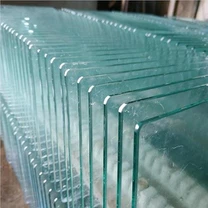
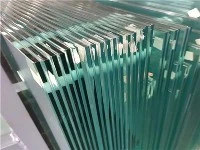
Tempered glass belongs to a category of high-performance safety glass, which is produced from standard annealed float glass through dedicated thermal treatment.
Complete Tempering Production Process
Precision Cutting Large raw annealed glass sheets (standard size: 3660×2440mm) are cut into finished panels according to customized dimension requirements.
High-Temperature Heating Cut glass pieces are sent into a tempering furnace and heated up to nearly 700°C, the softening temperature of glass. Heating duration varies based on glass thickness:
- 5–6mm glass: 240 seconds heating at 700°C
- 8–10mm glass: 500 seconds heating at 700°C
Uniform Rapid Cooling The hot glass is immediately cooled evenly with strong air flow. Cooling cycle also matches thickness:
- 5–6mm glass: 150 seconds cooling
- 8–10mm glass: 300 seconds cooling
Core Performance Advantages After Tempering
The fast cooling procedure creates balanced stress distribution: uniform compressive stress on the glass surface and tensile stress inside the glass substrate. This special internal structure greatly boosts the glass's bending resistance and impact resistance. The mechanical strength of tempered glass reaches roughly 4 times that of regular annealed glass.
Key Limitations & Handling Notes
No secondary machining allowed Once tempered, the glass cannot be cut, edge polished, drilled or modified again. Any physical processing will break the balanced surface compressive stress and cause the whole panel to shatter instantly.
Edges & corners are fragile weak points Glass edges and corners bear concentrated stress, making them vulnerable to collision damage. For long-distance sea or land transportation, full protective packaging for all edges and corners is mandatory to avoid breakage.
Fragmentation Comparison
The attached images demonstrate the distinct broken patterns of tempered safety glass vs ordinary annealed glass after impact damage.