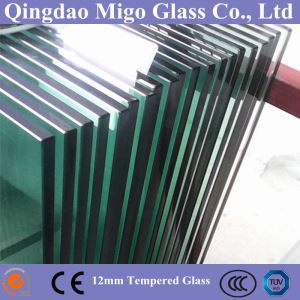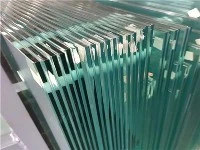

A new batch of 10mm pool fencing glass ordered by a New Zealand customer is currently being processed at the MIGO GLASS factory. These glass panels will be used for a residential swimming pool fencing project where safety, accurate dimensions and a clean architectural appearance are important.
10mm toughened glass is widely used for pool fencing because it offers high strength, clear visibility and a modern appearance. Compared with solid barriers, clear glass pool fencing maintains an open view of the swimming pool and surrounding outdoor area.
Although the processing procedure for this order is relatively straightforward, every production stage requires careful quality control. Accurate cutting, polished edges, precisely positioned holes and stable tempering all contribute to the quality and installation performance of the finished pool fence glass panels.
1. Glass Cutting and Cutting Plan Optimization
The first step is cutting the raw glass sheets according to the dimensions specified in the customer's drawings.
Before production begins, our team calculates the most suitable jumbo glass sheet sizes and creates an optimized cutting plan. This helps us:
- Reduce glass waste
- Improve raw material utilization
- Control the cost of each glass panel
- Maintain consistent panel dimensions
- Improve production efficiency for batch orders
Cutting optimization is particularly important for custom-size pool fencing glass, as one project may require several panel widths, gate panels and special-sized pieces.
By arranging the cutting layout efficiently, we can reduce unnecessary material waste and offer more competitive prices to importers, distributors and project contractors.
After cutting, the length, width and diagonal measurements of each panel are checked against the confirmed production specifications.
2. Flat Polished Edges and Safety Corners
For this New Zealand pool fencing project, the customer specified flat polished edges.
The edges are first ground flat and then polished to create a smooth, clear and refined finish. Compared with a basic arrised or seamed edge, a flat polished edge is more suitable for frameless glass pool fencing, where the glass edges remain visible after installation.
The panels are also processed with commonly used safety corners. This treatment removes sharp corner points, improves the appearance of the panels and makes the glass safer to handle during packaging, transportation and installation.
Consistent edge processing is particularly important for toughened glass. Proper grinding and polishing help reduce visible edge defects and provide a clean finish for exposed architectural glass.

3. Precision Hole Drilling According to Customer Drawings
After edge polishing, the required holes are drilled according to the customer's technical drawings.
This order requires round holes for the pool fencing installation system. During drilling, our operators carefully control the following parameters:
- Hole diameter
- Distance between holes
- Distance from the hole to the glass edge
- Hole position
- Dimensional tolerance
Accurate hole placement helps the glass panels match the specified stainless steel pool fencing spigots, clamps and other installation fittings.
All drilling and other mechanical processing must be completed before tempering. Once the glass has been toughened, it cannot be cut, drilled or reshaped.
For this reason, customers should confirm the glass dimensions, hole positions, cut-outs and hardware specifications before production begins.

4. Glass Tempering in a Glaston Furnace
The final major production stage is glass tempering.
MIGO GLASS uses an imported Glaston continuous tempering furnace to process the 10mm pool fencing glass. During tempering, the glass is heated to a controlled temperature and then rapidly cooled.
This process significantly improves the strength of the glass compared with ordinary annealed glass. If toughened glass breaks, it is designed to fragment into relatively small pieces instead of large, sharp shards.
The Glaston tempering system also helps maintain stable control over important quality factors, including:
Glass flatness
Surface quality
Tempering consistency
Mechanical strength
Fragmentation performance
Production stability
The glass is processed according to the customer's confirmed drawings and project specifications. Each production batch is inspected before packing and shipment.
Custom Pool Fencing Glass for New Zealand Projects
Glass pool fencing is used in New Zealand residential developments, villas, hotels, holiday properties and other outdoor leisure facilities.
A transparent glass barrier provides safety around a swimming pool while preserving the view of the pool, garden and surrounding landscape. Frameless and semi-frameless systems are particularly suitable for contemporary architectural projects.
MIGO GLASS supplies custom toughened pool fencing glass in different sizes, thicknesses and processing configurations. Available options include:
- Clear toughened glass
- Extra-clear low-iron glass
- Custom panel dimensions
- Flat polished edges
- Safety corners
- Round or special-shaped holes
- Glass gate panels
- Custom cut-outs
- Matching stainless steel fittings
With more than 20 years of experience in architectural glass processing, MIGO GLASS manufactures safety glass for pool fences, stair railings, balcony railings and deck railings.
In addition to processed glass panels, we can also supply stainless steel pool fencing hardware. This allows importers, wholesalers, distributors, installers and contractors to purchase glass panels and compatible installation fittings from one supplier.
Additional Guide: Common Glass Edge Types
Selecting the correct edge finish is an important part of ordering custom processed glass. The most suitable option depends on whether the glass edge will be visible, concealed or regularly handled.
Main Differences Between Glass Edge Types
|
Edge Type |
Finish Level |
Appearance |
Typical Application |
|---|---|---|---|
|
Arrised |
Basic |
Sharp corners lightly removed |
Hidden or less visible edges |
|
Seamed |
Basic |
Rough and functional |
Framed or concealed glass |
|
Ground |
Medium |
Even but not glossy |
Functional exposed edges |
|
Flat polished |
High |
Smooth, flat and glossy |
Pool fencing and visible decorative glass |
|
Pencil polished |
High |
Rounded and glossy |
Furniture and decorative glass |

Which Glass Edge Should Buyers Specify?
Before placing an order, buyers should confirm whether the glass edge will be:
- Visible or concealed
- Decorative or functional
- Installed inside a frame
- Exposed to regular handling
Used for furniture, shower screens, railings or architectural glazing
The required edge finish should be clearly indicated in the technical drawings or product specifications.
Using descriptions such as arrised edge, seamed edge, ground edge, flat polished edge or pencil polished edge helps prevent misunderstandings between buyers and glass processors.
Ordering Custom Pool Fencing Glass
To request a quotation for 10mm toughened pool fencing glass, buyers can provide the following information:
- Glass type
- Glass thickness
- Panel dimensions
- Edge finish
- Corner requirements
- Hole diameter and position
- Required quantity
- Installation hardware
- Project application
- Destination market
Technical drawings are strongly recommended for glass panels with holes, cut-outs or custom shapes. Our team can review the drawings before production to confirm the processing details.
MIGO GLASS welcomes enquiries from pool fencing glass importers, wholesalers, distributors, installers and construction contractors looking for reliable custom glass processing and stainless steel installation fittings.