


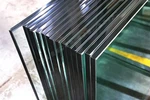


Qingdao Migo Glass Co., Ltd. is one of the most reliable manufacturers and suppliers of double insulated glass and vacuum insulated glass in China. With abundant experience, we warmly welcome you to wholesale high-grade double insulated glass and vacuum insulated glass in stock here from our factory. If you have any enquiry about custom service, please feel free to email us.
Comparison Between Double-Insulated Glass and Vacuum Insulated Glass
When it comes to energy efficiency and thermal performance in windows and doors, two popular options are double insulated glass (IG) and vacuum insulated glass (VIG). Each type offers distinct advantages and disadvantages. This article will compare these two glass technologies to help you make an informed decision for your project.

What is Double Insulated Glass?
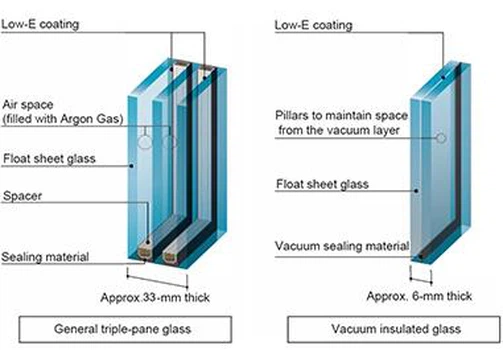
Double insulated glass, often referred to as double glazing, consists of two panes of glass separated by a space filled with air or gas (such as argon). This design reduces heat transfer through conduction, convection, and radiation.
What is Vacuum Insulated Glass?
Vacuum insulated glass features two or more glass panes separated by a vacuum space, effectively eliminating heat transfer through conduction and convection. This technology is known for its superior insulation properties.

Key Comparisons
1. Thermal Performance
Double Insulated Glass: Provides good thermal insulation, typically achieving a U-value (a measure of thermal transmittance) of around 1.0 to 2.0 W/m²K, depending on the gas used and the spacer technology.
Vacuum Insulated Glass: Offers superior thermal performance, often achieving U-values as low as 0.5 W/m²K or even lower. This makes it ideal for energy-efficient buildings.
2. Space Efficiency
Double Insulated Glass: Requires more space due to the air or gas-filled cavity, which typically ranges from 12mm to 20mm.
Vacuum Insulated Glass: Thinner than double glazing, with a typical thickness of around 6mm to 8mm, allowing for slimmer frames and more design flexibility.
3. Weight
Double Insulated Glass: Heavier due to the additional glass pane and spacer materials, which can be a consideration for larger installations.
Vacuum Insulated Glass: Lighter, making it easier to handle and install, especially in large formats.
4. Condensation Resistance
Double Insulated Glass: Can be prone to condensation if the seal fails, leading to moisture buildup between the panes.
Vacuum Insulated Glass: Less likely to experience condensation due to its superior insulating properties, maintaining a stable internal temperature.
5. Sound Insulation
Double Insulated Glass: Provides some sound reduction, but its effectiveness can vary based on the thickness of the glass and the gas used in the cavity.
Vacuum Insulated Glass: Generally offers better sound insulation due to the reduced air movement in the vacuum space.
6. Cost
Double Insulated Glass: Typically more affordable than vacuum insulated glass, making it a common choice for residential applications.
Vacuum Insulated Glass: Generally more expensive due to advanced manufacturing processes and materials, but offers long-term energy savings that can offset initial costs.
7. Durability and Lifespan
Double Insulated Glass: Generally durable but can suffer from seal failure over time, which can reduce effectiveness.
Vacuum Insulated Glass: Highly durable, with a longer lifespan when properly manufactured and installed, as the vacuum space is less susceptible to degradation.
Conclusion
Both double insulated glass and vacuum insulated glass have their unique benefits and drawbacks. Double insulated glass is a cost-effective option that provides good thermal performance and sound insulation, making it suitable for many residential applications. On the other hand, vacuum insulated glass offers superior insulation, space efficiency, and durability, making it ideal for energy-efficient buildings and high-performance applications.
When choosing between the two, consider factors such as budget, desired thermal performance, and the specific requirements of your project. By understanding the differences, you can select the best glass solution to meet your needs.
If you need more information, email us to contact our product advisors.
Email: bella@migoglass.com
Hot Tags: double insulated glass and vacuum insulated glass, China double insulated glass and vacuum insulated glass manufacturers, suppliers, factory, Double Insulated Glass And Vacuum Insulated Glass, Sound Insulation Glass, IGU, 8 2mm Vacuum Glass, Double Glazing Doors, Low E Insulated Glass for Curtain Walls


