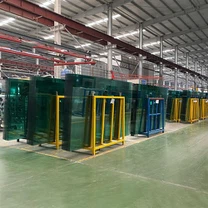
Advantages of tempered glass:
1. Safety: Tempered glass is much stronger than regular glass, making it less likely to break. In the event that it does break, it shatters into small, rounded pieces rather than sharp, jagged shards, reducing the risk of injury.
2. Durability: Tempered glass is more resistant to scratches and impacts compared to regular glass. It can withstand higher levels of thermal stress, making it suitable for use in high-temperature environments.
3. Heat resistance: Tempered glass has a higher heat resistance than regular glass, making it suitable for applications where thermal stress may be a concern, such as oven doors or fireplace enclosures.
4. Easy maintenance: Tempered glass is relatively easy to clean and maintain. It can be wiped down with regular glass cleaners without the risk of damage.
Disadvantages of tempered glass:
1. Cost: Tempered glass is generally more expensive than regular glass due to the additional manufacturing process required to strengthen it.
2. Difficult to modify: Once tempered glass is manufactured, it cannot be cut or modified without shattering. This can make it challenging to fit into specific shapes or sizes.
3. Inconsistent appearance: Tempered glass may have slight distortions or waves in its appearance due to the manufacturing process. This can be noticeable in certain applications where a perfectly clear and flat glass surface is desired.