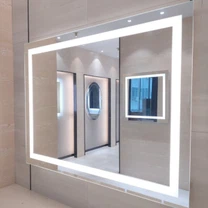
Copper-Free Silver Mirrors: An Innovative Approach
Conventional silver mirrors typically incorporate copper as a key component during their manufacturing process. However, a unique type of mirror, known as the copper-free silver mirror, has emerged as an alternative, eliminating the use of copper altogether.
In the production of copper-free silver mirrors, specialized techniques are employed to deposit the silver layer directly onto the glass substrate, without the need for a copper intermediate layer. One prevalent method is a chemical sedimentation process, where a specially treated silver sheet is applied onto high-quality float glass. Instead of copper, a specialized metal film is used as the barrier layer, enhancing the adhesion of the silver to the glass surface.
To ensure the longevity and durability of the silver layer, two protective paint layers are applied to the mirror. These paint layers serve a dual purpose: they provide chemical resistance, safeguard the mirror against potential damage from exposure to various substances, and offer physical protection, reducing the risk of scratches or other forms of harm.
The advantages of copper-free silver mirrors lie in their superior reflective properties, which are comparable to traditional silver mirrors, coupled with the elimination of copper components. This makes them an attractive option for residential and commercial environments where high reflectivity and clarity are desired, without the inclusion of copper.
The unique manufacturing process of copper-free silver mirrors sets them apart from their traditional counterparts, offering an innovative solution for those seeking mirrors with enhanced durability and environmental-friendliness, without compromising on optical performance.
Copper-free silver mirrors are typically manufactured using specialized techniques to deposit the reflective silver layer onto a glass substrate without the use of copper. Here's a general overview of the composition and manufacturing process:
Glass Substrate: The base of the mirror is usually made of high-quality float glass or low-iron glass. These types of glass provide a clear and smooth surface for the silver layer to be deposited onto.
Cleaning and Preparation: The glass substrate undergoes thorough cleaning and preparation to ensure that the surface is free from any contaminants or impurities. This step is crucial to achieve good adhesion between the glass and the silver layer.
Silver Deposition: The silver layer is deposited onto the clean glass substrate using specialized techniques such as physical vapor deposition (PVD) or chemical vapor deposition (CVD). These techniques allow for precise control over the thickness and uniformity of the silver layer.
Protective Coating: Once the silver layer is deposited, a protective coating is applied on top to prevent tarnishing and corrosion of the silver. This coating may be made of materials such as silicon dioxide (SiO2) or other transparent materials.
Quality Control: The mirror undergoes rigorous quality control checks to ensure that it meets the required optical and performance standards. This may include testing for reflectivity, durability, and resistance to environmental factors.
Overall, the manufacturing of copper-free silver mirrors involves a combination of advanced materials science and precision deposition techniques to produce high-quality mirrors suitable for various applications.