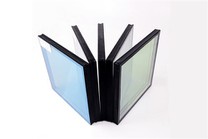
Solar photovoltaic glass is a kind of special glass that can use solar radiation to generate electricity by laminating into solar cells and has related current extraction devices and cables. It is composed of low-iron glass, solar cells, film, back glass, and special metal wires. The solar cell is sealed between a piece of low-iron glass and a piece of back glass through the film. It is one of the most innovative high-tech constructions. Glass products. The use of low-iron glass to cover the solar cell can ensure high sunlight transmittance. The tempered low-iron glass also has stronger resistance to wind pressure and the ability to withstand large changes in temperature between day and night.
The thinning trend of double glass modules is obvious
At present, the mainstream thickness of double-glass modules is 2.5mm for a single piece. In order to reduce weight and cost, there has been a trend towards 2.0mm or even thinner 1.6mm. However, the higher cost of the tempering process and the downstream recognition of the protection of thinner glass for solar cells are the current photovoltaic glass sheets. The main resistance to globalization. The packaging form of photovoltaic modules is shifting to 2.0mm double glass, but the structural evolution is a clear trend. However, the cost reduction and reliability verification of 2.0mm glass will take a certain period of time. It is expected that 2.5mm glass will still be the mainstream choice for double glass modules in the mid-term.
The 2.5mm double glass ribbon frame module weighs 24~26kg, which is higher than the traditional single glass module transportation cost and installation cost. If the double glass module is frameless, it will be more difficult to install, and the glass may burst during use. The 2.0mm double-glass half-frame module weighs only 20kg, which can be picked up by a worker. Compared with the single-glass module, the weight is only increased by about 1kg. The impact on transportation and installation is small. The installation of the double-glass module with frame is damaged and bursts in use. The situation will be significantly reduced, solving the biggest obstacle to the promotion of double-sided double glass modules.

With the rationalization of the price of 2.0mm glass, framed 2.0mm double-glass modules will achieve the same manufacturing cost as ordinary single-glass modules or transparent backplane modules, and the weight will be controlled below 23kg. Compared with ordinary single-sided modules, the backside power generation gain and relative The high reliability of transparent backplane components will be a pure additional benefit. With the increasing demand for double glass and the technological transformation of large factories and large production lines, the premium of thin glass will gradually be eliminated. Reasonable prices should be anchored by cost, which is expected to drop significantly; after the price of thin glass returns to reasonable, double glass modules will be better than single glass modules The cost is lower, and the backside power generation gain is equivalent to a free gift, and the double-sided and double-glass modules have absolute advantages and are quickly promoted.

2.0mm and 2.5mm photovoltaic glass are in the early stages of their launch, and the cost is relatively high. Although 20-40% of the original glass is saved compared to 3.2mm glass, the price difference with 3.2mm glass does not reflect the cost advantage it deserves. As the double-glass trend drives the growth of demand for thin glass, the technological transformation and technological progress of large glass factories and large production lines, the price of thin glass will fall.
Although the 2.5mm or 2.0mm glass used in the double-glass module is thinner than the single-glass 3.2mm glass, the amount of glass required for one module has been increased from one to two, so the double-glass permeability will increase significantly Demand for original photovoltaic glass (measured in tons). It is estimated that the original photovoltaic glass required for the production of 1GW 2.5mm double glass modules, 2.0mm double glass modules, and single glass modules is about 89,000 tons, 73,000 tons, and 56,000 tons. That is to say, the same number of double glass modules is more effective than single glass modules. The demand for original glass is about 30~60% higher.