The customer asked about the problem of artificial turf for padel court
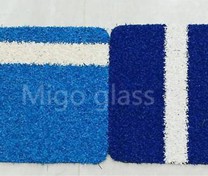
A customer consulted us about a problem about artificial grass for padel court. He is an emerging field builder who is building a padel court and intends to use artificial grass as the surface material of the field. However, when communicating with the workers about the installation, the customer raised a problem that bothered him: the cutting of artificial grass seemed to be very troublesome, and he felt that it was not accurate enough and inefficient when he cut it himself. The customer hopes to find a simple solution to improve the efficiency of installation and ensure the beauty and quality of the lawn. This problem triggered our thinking about the production process and installation technology of artificial grass for padel courts. Through this case, we can more clearly understand how to improve the convenience of the installation process, especially in the cutting and splicing links.
Artificial turf production process
Before understanding how to solve the customer's cutting problem, let's first take a look at the production process of artificial grass to help customers better understand the construction and manufacturing details of artificial grass.
- Selection of raw materials
The production of artificial grass starts with the selection of suitable raw materials. Generally, the main materials for making artificial grass include polyethylene (PE), polypropylene (PP) and nylon. These materials not only have good wear resistance and UV resistance, but also simulate the touch of natural grass. Polyethylene is the most common choice, it is soft and durable, suitable for padel courts that require frequent use.
- Making of grass filaments
The manufacturing of grass filaments is usually done through an extrusion process. Plastic particles are melted and extruded to form grass filaments through high temperature heating. The length and shape of the grass filaments (such as straight or curved filaments) vary according to different usage requirements. Usually, the grass filaments used in padel courts are short-haired grass filaments with a length of about 20mm to 50mm, which can ensure the appearance of the lawn while maintaining sports performance.
- Making of turf base cloth
After the grass filaments are completed, the next step is to fix the grass filaments to the base cloth. The base cloth is generally made of polyester fiber or other fabrics with a certain strength, which can effectively support the grass filaments and improve the stability of the lawn. The base cloth fixes the grass filaments to its surface through needle punching technology to form a solid turf layer.
- Coating and trimming
In order to improve the durability and UV resistance of artificial grass, a protective coating is usually applied to the grass filaments during the production process. In addition, some high-end artificial grass will also enhance the elasticity and cushioning performance of the lawn by adding sand or rubber particles to fill the bottom.
- Quality Inspection and Packaging
After completing the above production steps, the artificial grass will undergo strict quality inspection to ensure that its durability, softness and safety meet the standards. Qualified lawns will be rolled up and packaged according to specifications, ready to be transported to the construction sites of various customers.
Technical parameters of artificial turf for padel courts
After understanding the production process of artificial grass, we need to further understand the parameters of artificial grass, especially its use in padel courts. Different parameters will directly affect the performance and service life of artificial grass.
- Grass filament height
The height of the grass filament is crucial to the sports performance of the padel court. Generally, the grass filament height of the artificial grass used in the padel court is between 20mm and 50mm. Shorter grass filaments can ensure the rebound of the ball, avoid the field from being too soft and collapsing, and make the game more challenging.
- Lawn density
The density of the lawn refers to the number of grass filaments per unit area. Artificial grass with higher density can better imitate the texture of natural lawns and effectively enhance the comfort of sports venues. For padel courts, the density of the lawn is usually required to be high to increase the service life of the venue.
- Wear resistance and UV resistance
The artificial grass of the padel court needs to withstand frequent exercise and sun exposure, so wear resistance and UV resistance are crucial. High-quality grass fibers are treated with UV resistance, which can effectively delay the fading of the grass fibers and extend the service life of the lawn.
- Grass fiber material
The grass fiber material of artificial grass determines the touch and durability of the lawn. High-quality artificial grass generally uses polyethylene (PE) or polypropylene (PP) materials. Polyethylene grass fibers are relatively soft and suitable for sports venues, which can effectively reduce the injuries of athletes.
- Filling materials
Some padel courts use sand or rubber particles to fill the bottom of the lawn. These fillers can increase the elasticity of the lawn, make the venue smoother, and improve the comfort of athletes. The quality and type of filling materials are also important factors affecting the quality of the court.
Solve the customer's cutting problem: splicing technology and installation service
Back to the problem mentioned by the customer-how to simplify the cutting and installation process of artificial grass. In fact, the installation of artificial grass does not require customers to cut and fine-tune it themselves, but can be installed more efficiently and accurately through the factory's splicing technology.
- Factory cutting and numbering
In order to avoid tedious cutting on site, many professional artificial grass manufacturers will pre-cut according to customer needs in the factory and pack the cut grass according to the predetermined number. These grass blocks will be cut into specifications suitable for installation. After receiving the grass, customers only need to splice according to the number without additional cutting. This method not only greatly reduces the installation time, but also ensures that the size of each piece of grass is consistent, ensuring the overall flatness and beauty of the site.
- Splicing technology
Artificial grass splicing is usually connected by hot melt tape, splicing strips or special joint glue. The bottom of the splicing strip is usually sticky, which can firmly connect the two sides of the grass together during installation, ensuring that the splicing is flat and firm and not easy to separate. In order to further improve the stability of the lawn, some high-end manufacturers will also use seamless splicing technology, which can not only avoid gaps between lawns, but also reduce the possibility of cracks on the lawn surface.
- Installation guidance and support
In addition to providing cut turf blocks and splicing technology, professional manufacturers will also provide detailed installation guidance to ensure that customers can follow the correct steps for installation. In some cases, manufacturers will also send technicians to the site to provide technical support to help customers successfully complete the installation and ensure the best quality of the venue.
Regarding the problem of "artificial grass cutting is inconvenient" raised by customers, the factory can provide customers with a simpler solution through pre-cutting and numbered splicing technology. In this way, customers can save the trouble of on-site cutting and directly splice according to the number, improve installation efficiency, and ensure installation accuracy and the overall beauty of the lawn. Through a complete production process, strict quality control and considerate installation services, the application of artificial grass in padel courts will become more convenient and efficient, thus providing customers with a better user experience.