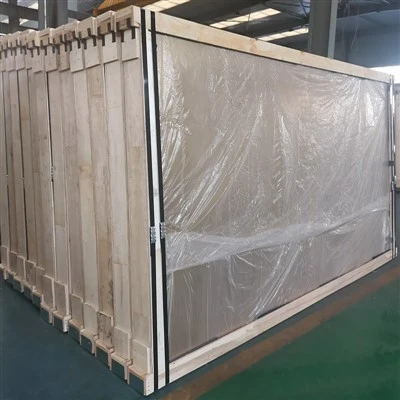
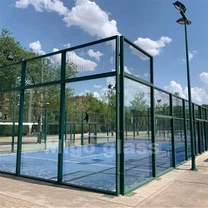
Tempered glass is widely used in padel courts, sports facilities, and architectural applications because of its strength and safety. However, not all tempered glass performs the same. Beyond impact resistance, professional buyers should also pay attention to glass flatness and optical performance, as these factors directly affect installation quality and the overall appearance of the finished project.
For overseas contractors and distributors, poor flatness can increase installation time, while excessive optical distortion may reduce the premium appearance of a sports facility.
Why Flatness Matters
During the tempering process, glass is heated to a high temperature and then rapidly cooled. If the heating or cooling is not evenly controlled, the glass may develop slight deformation.
Although these changes are often small, they become more noticeable when multiple glass panels are installed side by side, especially in panoramic padel courts.
Poor flatness may lead to:
- Uneven panel alignment
- Larger installation gaps
- Higher stress on connectors
- Longer installation time
- Reduced visual quality
For projects using large-format tempered glass, maintaining consistent flatness is particularly important.
What Causes Optical Distortion?
Optical distortion refers to the visual waves or reflections that appear when looking through tempered glass.
Several manufacturing factors influence optical quality, including:
- Heating temperature consistency
- Cooling uniformity
- Roller quality
- Glass thickness
- Production equipment accuracy
Modern tempering furnaces with automatic temperature control generally produce more consistent optical performance than older equipment.
For sports courts, excessive distortion can affect visibility, particularly when players track fast-moving balls or spectators watch matches through the glass.
The Importance of Roller Wave Control
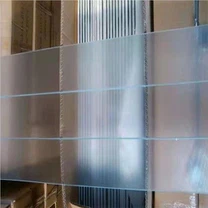
One common characteristic of tempered glass is roller wave, which occurs because the glass passes over ceramic rollers during the heating process.
While some roller wave is unavoidable, high-quality manufacturers carefully control:
- Roller spacing
- Furnace temperature
- Cooling speed
- Production line calibration
Better process control helps minimize visible distortion and improves the finished appearance.
Quality Inspection Before Shipment
Professional buyers often request additional inspections before bulk purchasing.
Important inspection items include:
- Glass flatness
- Surface distortion
- Edge quality
- Hole position accuracy
- Panel dimensions
- Surface defects
Large commercial projects may also require third-party inspections before shipment to verify production quality.
Flatness Inspection Checklist
| Inspection Item | Why It Matters |
|---|---|
| Glass Flatness | Easier installation |
| Optical Distortion | Better visibility and appearance |
| Roller Wave | Improved visual quality |
| Edge Finish | Reduces stress concentration |
| Hole Accuracy | Matches connector system |
| Surface Inspection | Premium finished appearance |
Project Example
A contractor in Germany ordered tempered glass for a panoramic padel court where visual appearance was a key selling point. During sample evaluation, two suppliers provided glass with similar strength and certifications, but one showed noticeably lower optical distortion when viewed from different angles.
Although the second supplier offered a slightly lower price, the developer selected the manufacturer with better flatness and optical quality because the finished court would be used for tournaments and promotional photography.
The decision resulted in a cleaner appearance after installation and fewer adjustments during assembly.
Final Thoughts
High-quality tempered glass is defined by more than its strength. Flatness, optical performance, edge processing, and dimensional accuracy all influence installation efficiency and the overall quality of a sports facility.
When comparing suppliers, buyers should look beyond basic certifications and request information about tempering equipment, inspection standards, and quality control procedures.
For premium padel court projects, investing in glass with better flatness and lower optical distortion can improve both the installation process and the long-term visual appeal of the finished court.