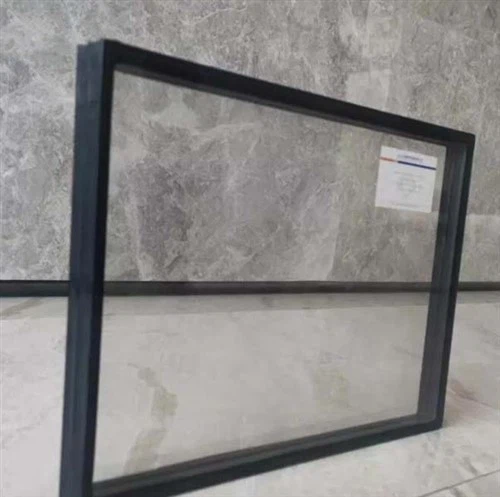
Insulated glass units (IGUs) are widely used in commercial buildings, residential windows, and curtain wall systems. While glass thickness and Low-E coatings receive considerable attention, spacer materials also play an important role in the overall performance of insulated glazing.
For glass distributors, construction contractors, and architectural project buyers, understanding different spacer materials can help improve product selection and purchasing decisions.
What Is an Insulated Glass Spacer?
A spacer is positioned between the glass panes of an insulated glass unit. Its primary function is to maintain the required cavity width and form part of the sealed edge system.
Spacers work together with desiccants and sealing materials to help control moisture inside the cavity and maintain the intended insulating glass construction.
Different spacer materials have different thermal and mechanical properties.
Aluminum Spacers vs. Warm Edge Spacers
Aluminum spacers are commonly used in traditional insulated glass units. They offer dimensional stability and are widely available for different glazing configurations.
However, aluminum conducts heat relatively easily, which can increase heat transfer around the glass edges.
Warm edge spacers are designed to reduce thermal bridging at the perimeter of insulated glass units. Depending on the product, they may use stainless steel, polymer-based materials, or composite constructions.
A suitable warm edge system can improve edge thermal performance and help reduce the risk of condensation under certain conditions.
How Do Spacer Materials Affect Energy Efficiency?
The thermal performance of an insulated glass unit depends on several components working together.
These include glass thickness, Low-E coatings, cavity width, gas filling, spacer materials, and edge sealing.
Using a lower-conductivity spacer can improve thermal performance near the glass perimeter. However, the actual improvement depends on the complete glazing and frame system.
B2B buyers should request relevant thermal performance information instead of comparing spacer materials based only on product descriptions.
Why Are Sealing and Moisture Control Important?
The durability of insulated glass units depends heavily on the quality of the edge seal.
Spacer systems must be compatible with the selected primary and secondary sealants. Proper manufacturing and sealing help limit moisture penetration and gas loss over time.
Buyers should confirm the spacer system, desiccant requirements, sealing materials, and applicable quality standards before placing large-volume orders.
What Should B2B Buyers Consider?
When purchasing insulated glass units, buyers should evaluate:
- Spacer material and construction
- Required cavity width
- Thermal performance specifications
- Compatibility with sealing materials
- Gas filling requirements
- Glass dimensions and overall thickness
- Applicable testing and certification requirements
- Manufacturing consistency for bulk orders
These factors help ensure that the selected spacer system matches the architectural project requirements.
Conclusion
Spacer materials are an important component of insulated glass performance. Although they are less visible than glass coatings or thickness, they influence edge thermal performance and contribute to the construction of the sealed glazing unit.
For international glass buyers, selecting suitable spacer materials and confirming the complete IGU configuration can help achieve the required performance and long-term reliability.
Learn more about customized architectural glass solutions at MIGO Glass.