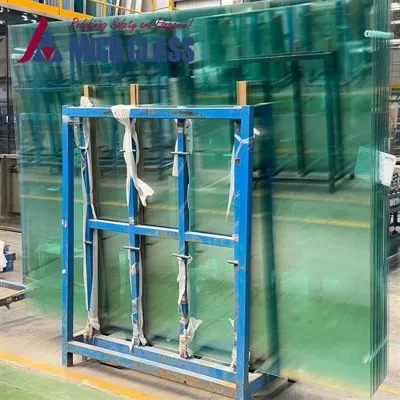
Laminated glass is widely used in architectural applications where safety, security, sound reduction, transparency, or post-breakage retention is required.
It is made by bonding two or more glass sheets with an interlayer such as PVB or SGP. If the glass breaks, the interlayer helps hold the fragments together.
For architects, contractors, distributors, and project buyers, choosing laminated glass requires more than selecting a total thickness. The glass composition, interlayer type, processing method, appearance, and installation conditions should all be considered before placing an order.
Start With the Application
The first step is to understand where the laminated glass will be used.
Common applications include:
- Glass railings
- Curtain walls
- Skylights and canopies
- Doors and partitions
- Staircases
- Facades
- Floors and walkways
- Interior decorative glass
Different applications may require different glass configurations.
For example, a railing panel and an interior partition may have very different load, safety, edge exposure, and appearance requirements.
Buyers should therefore provide the intended application when requesting a quotation.
Choose the Right Glass Configuration
Laminated glass can be produced using different combinations of glass thicknesses.
Examples may include two equal glass sheets or asymmetric configurations using different thicknesses on each side.
The correct composition depends on panel size, support conditions, project requirements, and relevant standards.
Buyers should avoid specifying only a total thickness such as "12mm laminated glass" without confirming the actual build-up.
A clearer specification would identify each glass layer and the interlayer.
PVB or SGP Interlayer?
PVB is commonly used in architectural laminated glass and is available in clear, colored, acoustic, and other specialized versions.
SGP is another interlayer option used in certain structural or demanding architectural applications.
The two materials have different mechanical and performance characteristics, so the choice should depend on the project design rather than price alone.
For applications such as structural railings, canopies, or large exposed panels, the interlayer specification should be confirmed with the project engineer or system designer.
Tempered or Heat-Treated Glass?
Laminated glass can be produced from annealed, heat-strengthened, or tempered glass depending on the application.
Tempered laminated glass is commonly selected when higher glass strength and specific breakage behavior are required.
However, heat treatment should be specified according to the complete architectural system.
Buyers should clearly indicate whether the laminated glass requires tempered or heat-strengthened components before production.
Consider Edge Exposure
Edge condition is especially important in laminated glass applications.
In some projects, the glass edge remains exposed after installation. In others, the edge is protected by a frame or channel.
Exposed edges may require higher appearance standards and careful edge processing.
Buyers should also confirm whether the interlayer edge will be visible and whether the installation environment includes long-term exposure to moisture or weather.
Check Optical and Appearance Requirements
Architectural laminated glass may use clear, low-iron, tinted, coated, fritted, or patterned glass.
For projects where transparency is important, low-iron glass can help reduce the green appearance associated with standard clear glass.
If multiple panels are installed next to each other, color and appearance consistency can also become important.
For large projects, samples can help buyers confirm visual requirements before mass production.
Processing Must Be Confirmed Before Production
Laminated glass may require holes, notches, cut-outs, polished edges, or custom shapes.
If the glass layers are tempered, these mechanical processing details normally need to be completed before tempering and lamination.
Technical drawings should therefore clearly show all finished dimensions and processing requirements.
This is particularly important for railings, doors, and other applications that use metal fittings or point-fixing systems.
What Buyers Should Confirm Before Ordering
Before placing a laminated glass order, buyers should confirm:
- Glass composition
- Individual glass thicknesses
- Interlayer type and thickness
- Tempered or heat-strengthened requirements
- Finished dimensions
- Holes and cut-outs
- Edge processing
- Glass color or coating
- Optical requirements
- Quantity
- Packaging and labeling
- Applicable project standards
For larger projects, a complete glass schedule can help organize multiple sizes and configurations.
Selecting Laminated Glass as a Complete System
Laminated glass should not be selected based on thickness alone.
The correct product depends on the interaction between glass type, interlayer, heat treatment, dimensions, hardware, support conditions, and project requirements.
For overseas architectural glass buyers, providing complete drawings and specifications allows the manufacturer to evaluate the product more accurately before production.
By defining the full laminated glass configuration at the purchasing stage, buyers can improve communication, reduce specification errors, and better match the glass to the final architectural application.