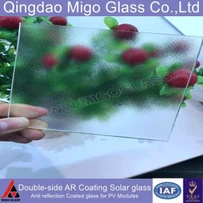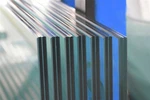
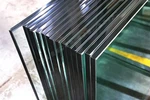


Qingdao Migo Glass Co., Ltd. is one of the most reliable manufacturers and suppliers of glass for padel court construction in China. With abundant experience, we warmly welcome you to wholesale high-grade glass for padel court construction in stock here from our factory. If you have any enquiry about custom service, please feel free to email us.
In the construction of Padel court, many people are not very clear about the use of glass. This article will take you through the types and production process of glass used in Padel court.
Padel court glass types include 10mm, 12mm tempered glass and 13.52mm (6mm+1.52PVB+6mm) laminated glass.
The following will introduce the production process of Padel court tempered glass.
1. Raw material preparation
The production of tempered glass begins with the selection and preparation of raw materials. The main raw materials include:
Float glass: This is the basic material of tempered glass, usually made of silica sand, soda-lime glass raw materials and other additives melted at high temperature. Float glass has uniform thickness and high transparency, suitable for subsequent tempering.
Auxiliary materials: such as release agents, additives, etc., help improve the performance and processing of glass.
2. Glass cutting
Before producing tempered glass, float glass needs to be cut according to design requirements. Float glass is usually supplied in large plates, and the cutting process cuts these large plates into glass sheets of the required size.
3. Glass cleaning
The cut glass sheets need to be thoroughly cleaned to remove dirt, grease and other impurities on the surface.
4. Preheating
The cleaned glass sheets need to be preheated to ensure that they are evenly heated during the tempering process. The preheating process is usually carried out in a dedicated preheating furnace to heat the glass to a certain temperature so that its surface temperature is uniform.
5. Tempering
Tempering is a key step in the production of tempered glass. It increases the strength of the glass by heating it to a high temperature and cooling it rapidly. The tempering process includes:
Heating: The glass sheet is heated to about 620-650 degrees Celsius. This temperature is enough to soften the glass and meet its tempering requirements.
Quick cooling: After reaching the predetermined temperature, the glass quickly passes through the cooling zone and a powerful fan is used to cool the glass to room temperature. This rapid cooling process causes the surface temperature of the glass to drop rapidly, thereby forming internal compressive stress and external tensile stress, which significantly improves the strength of the glass.
6. Cooling and inspection
After tempering, the glass needs to be naturally cooled to room temperature in the cooling zone. During this process, the stress on the surface and inside of the glass will be stabilized. The cooled glass sheet will be inspected in detail.
7. Post-processing
Qualified tempered glass needs to undergo some post-processing steps before leaving the factory:
Edge cutting: The cut edges of the tempered glass are polished to eliminate sharp edges and ensure safety.
Coating and protection: A protective coating is sometimes applied to the surface of the glass to improve durability and stain resistance.

The following is a detailed process of laminated glass production.
1. Raw material preparation
The core component of laminated glass is the interlayer material between two or more layers of glass sheets, usually a polymer layer (such as PVB, polyvinyl butyral) or EVA (ethylene-vinyl acetate copolymer).
2. Glass cutting
Before producing laminated glass, float glass needs to be cut according to the design requirements. The cutting process includes:
Measuring and marking: The glass is accurately measured and marked to determine the cutting size.
Cutting: Use a glass cutting tool (such as a cutting knife or laser cutting equipment) to cut along the marked line to ensure that the cutting edge is smooth and free of defects.
3. Cleaning and pretreatment
The cut glass sheets must be thoroughly cleaned to remove dust, grease and other impurities on the surface.
4. Preparation of interlayer materials
Interlayer materials (such as PVB or EVA) need to be precisely cut and prepared. The material is usually supplied in the form of a film and cut to a size that matches the glass sheet.
Cutting: Cut the interlayer material into appropriate sizes according to the size of the glass sheets.
Pretreatment: The interlayer material needs to be pretreated before use to ensure its adhesion and stable performance.
5. Lamination of glass and interlayer
Laminating glass sheets with interlayer materials is a key step in the production of laminated glass. This process includes:
Lamination: Place the interlayer material between two or more glass sheets to ensure that the interlayer material is flat and uniform without bubbles or wrinkles.
Inspection: During the lamination process, check the alignment of the interlayer material and the glass to ensure that there is no dust and impurities.
6. Pressing and heating of laminated glass
The formation of laminated glass requires pressing and heating by high temperature and high pressure to ensure the firm bonding of the interlayer material and the glass.
Heating: Put the laminated glass sheets into a special heating furnace and heat them to about 140-150 degrees Celsius. This temperature range is enough to soften the interlayer material and form a uniform bonding layer.
Pressing: During the heating process, the glass is pressurized by a vacuum press or pressing equipment to remove bubbles and air from the interlayer material to ensure the quality of the laminated glass.
7. Cooling and Inspection
The laminated glass that has been heated and pressed needs to be cooled to ensure its stability. During the cooling process, the glass will be slowly cooled to room temperature to avoid stress and deformation.
Cooling: In a dedicated cooling area, the laminated glass is naturally cooled to room temperature to ensure that the internal stress is stabilized.
Inspection: The cooled laminated glass will undergo a detailed quality inspection.
8. Post-processing and Packaging
Qualified laminated glass needs to undergo some post-processing steps before leaving the factory:
Edge cutting: The cut edges of the glass are polished to eliminate sharp edges and ensure safety.
Coating and protection: Sometimes a protective coating is applied to the surface of the glass to improve durability and stain resistance.
Marking and packaging: The laminated glass is marked (such as production date, specifications, etc.) and then packaged for transportation.

Hot Tags: glass for padel court construction, China glass for padel court construction manufacturers, suppliers, factory, Laminated Glass Fence For Padel Court, Padel Courts Manufacturer, Padel Tennis Court Construction, Custom Padel Courts, Padel Court Glass Manufacturer, Tempered Glass For Padel Court Construction