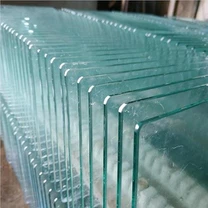
Starting in June 2020, and now ending in 2021, the price of photovoltaic glass has gone through two roller coasters, once rushing to the top, and once falling to the mountainside.
In November 2020, several photovoltaic module companies jointly issued a document calling for a solution to the shortage of photovoltaic glass. On December 16, the Ministry of Industry and Information Technology issued the "Implementation Measures for Capacity Replacement in the Cement Glass Industry (Revised Draft)" for comments, clarifying that photovoltaic rolled glass is not subject to capacity replacement restrictions.
The small price increase that began in September this year was largely due to the increase in the price of raw materials for photovoltaic glass, such as thermal coal, soda ash, and quartz sand.
The important position of photovoltaic glass in the photovoltaic industry

Although the cost of photovoltaic glass only accounts for 6%, its performance directly determines the efficiency and life of photovoltaic power generation. The manufacturing process of photovoltaic glass depends on the type of downstream photovoltaic cells. At present, the most mature and widely used photovoltaic cell technology is the crystalline silicon cell, which has a global market share of more than 80% (the other is the thin-film cell). Therefore, the production method of photovoltaic glass is mainly ultra-white rolling process. Ultra-white means that the glass contains low iron and has a high light transmittance. Patterns mean reducing the reflection of light and enhancing the transmittance of sunlight.
Photovoltaic glass has to go through more than 10 steps from the original sheet to the finished product, among which the tempering treatment can significantly increase the strength of the photovoltaic glass.
Light transmittance + high strength can be said to be the only way for photovoltaic glass to occupy an important position.
The upstream of photovoltaic glass is soda ash (sodium carbonate), quartz sand and petrochemical industries. The raw materials are soda ash and quartz sand, and the fuel is thermal coal, natural gas and so on. These two alone accounted for more than 80% of the total cost. Under this circumstance, the prices of upstream bulk commodities have risen, and it is difficult for glass not to rise in price.
How to reduce the cost of photovoltaic glass
1) Expand production capacity
The photovoltaic glass itself has a high degree of standardization, but the prices of products from different manufacturers are basically the same.
So from the perspective of open source, expanding production capacity is the kingly way for players to seize the market. In 2020, the output of ultra-clear rolled glass was 7.5 million tons, a year-on-year increase of 22%. In the next few years, various institutions predict that as the downstream photovoltaic industry is improving, and cross-border kings (such as Kibing Group and Fuyao Glass) continue to flow in, the production capacity of photovoltaic glass is expected to continue to expand.

2) Cost control
Generally speaking, the larger the furnace scale, the lower the energy consumption per ton of materials and fuel, and the higher the production efficiency. Generally, the two have an approximately linear relationship. At the same time, as the service life of the furnace to produce photovoltaic glass increases, the refractory materials inside the furnace will gradually lose, and the heat loss will increase, which will eventually reduce the energy efficiency of the kiln. The unit cost of a 1000 tons/day production line is 10%-20% lower than that of 650 tons/day.