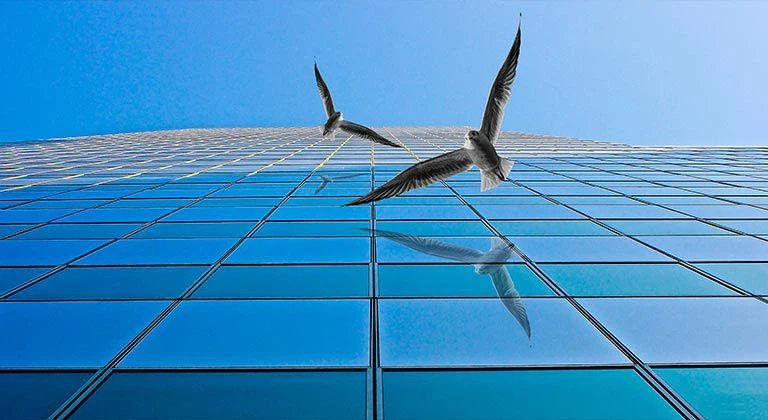
Bird-friendly glass, also known as bird-safe glass, is a specialized type of glass designed to prevent avian collisions with transparent or reflective surfaces. This innovative material is crucial in urban environments where glass facades and windows pose a significant threat to bird populations.
Types of Bird-friendly Glass:
- Ultraviolet (UV) Reflective Glass: Birds can see ultraviolet light, which is invisible to humans. UV-reflective glass has coatings that reflect UV light, making the glass perceptible to birds.
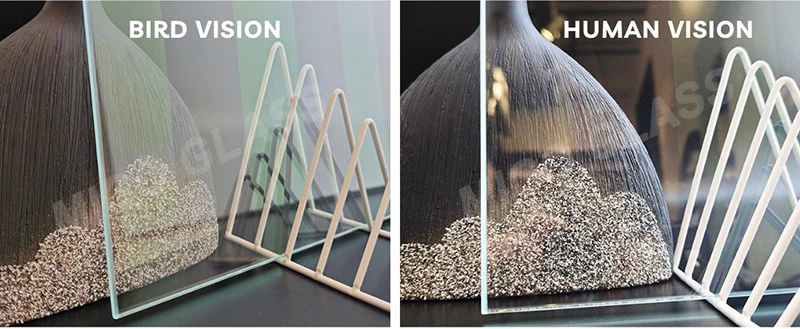
- Fritted Glass: Ceramic frit patterns are baked onto the glass surface, creating a visual marker for birds.

- Angled or Oriented Glass: Glass that is tilted or oriented in a specific manner to reduce reflections that can confuse birds.
Production and Processing Techniques:
The manufacturing of bird-friendly glass involves several specialized processes:
- Etching: Acid or abrasive techniques are used to create patterns on the glass surface.
- Printing: UV-curable inks are applied to the glass in patterns that are discernible to birds.
- Coating: Application of UV-reflective or other specialized coatings that alter the glass's appearance to avian eyes.
- Frit Application: Ceramic frits are screen-printed onto the glass and then fused during the tempering process.
Product Characteristics:
- Visibility: The glass must have patterns or coatings that are detectable by birds, typically with markers spaced no more than 2 inches apart horizontally and 4 inches apart vertically.
- Durability: Bird-friendly glass is designed to withstand environmental factors while maintaining its bird-deterrent properties.
- Aesthetics: The glass is engineered to balance bird safety with human architectural and design preferences.
Applications:
Bird-friendly glass is utilized in a variety of settings, including:
- Commercial Buildings: To create safer environments for birds in urban landscapes.
- Residential Homes: Particularly in areas with high bird traffic or near natural habitats.
- Public Institutions: Such as museums, schools, and libraries, where large glass surfaces are common.
- Transportation Hubs: Airports and bus stations use bird-friendly glass to reduce the risk of bird strikes.
In conclusion, bird-friendly glass is an essential development in the intersection of architecture, environmental conservation, and animal welfare. Its production and application reflect a growing awareness of the need to design with both human and ecological considerations in mind.