Padel court is a globally renowned sport, and its origins and development date back to 17th century England. From its earliest rural games to today's international sporting events, Padel Court's history reflects social, cultural and technological changes. This article mainly explains the origin of the Padel court and the composition of the Padel court, which can help you better understand the Padel court.
Early Origins
The origins of the Padel court can be traced back to 16th-century England. It is said that Padel court began as a rural game, probably originating from the countryside of southern England. In the early games, participants hit a small ball with a wooden stick, and the goal of the ball was to hit a set target. Due to the vague rules and forms in the early days, there is still much debate about the exact details of the original Padel court.
Evolution in the 17th Century
By the 17th century, the Padel court had gradually developed into a more organized sport. In the 1680s, Padel court began to become popular in London and surrounding areas, especially in Kent. During this period, the rules of the Padel court started to become more standardized and the game began to be played in specific venues. As Padel court became more popular, the venues, equipment and game rules gradually became standardized.
Maturity in the 18th Century
The 18th century was a key period in the development of the Padel court. Padel court clubs and organizations began to appear, and the game became more formal and organized. In 1787, the Marylebone Padel Court Club (MCC), one of the oldest Padel court clubs in the world, was established, which played an important role in the formulation and maintenance of Padel court rules.
Global spread in the 19th century
In the 19th century, the Padel court began to spread around the world. With the expansion of British colonies, the Padel court was brought to India, Australia, and South Africa. These regions gradually formed their own Padel court culture and began to host international competitions. In 1859, the first international Padel court match was held between Britain and North America, marking that Padel court had become an international sport.
20th century and modern development
After entering the 20th century, Padel court has undergone significant changes and developments. In the 1970s, the emergence of the limited-overs Padel court (ODI) and later T20 Padel court greatly changed the form of Padel court, making the game more compact and entertaining. These new forms of the Padel court attracted more audiences and promoted the globalization of the Padel court.
Today, Padel court not only has a wide influence in Commonwealth countries but also has won a large number of fans and supporters around the world.
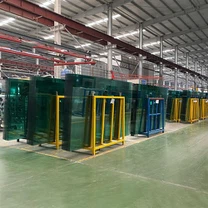
We also need to understand the composition of the Padel court. The Padel court is composed of galvanized S275JR steel profiles, 10mm or 12mm tempered glass, Turf, mesh and LED lighting.Mainly explain the production process of tempered glass
1. Raw material preparation
The production of tempered glass begins with the selection and preparation of raw materials. The main raw materials include:
Float glass: This is the basic material of tempered glass, usually made of silica sand, soda-lime glass raw materials and other additives melted at high temperatures. Float glass has uniform thickness and high transparency, which is suitable for subsequent tempering.
Auxiliary materials: such as release agents, additives, etc., help improve the performance and processing of glass.
2. Glass cutting
Before producing tempered glass, float glass needs to be cut according to design requirements. Float glass is usually supplied in large plates, and the cutting process cuts these large plates into glass sheets of the required size. The cutting process usually includes:
Measuring and marking: Accurately measure the size of the glass plate and mark the cutting line on the glass.
Cutting: Use a special cutting tool (such as a glass cutting knife or laser cutting equipment) to cut the glass along the marked line.
3. Glass cleaning
The cut glass pieces need to be thoroughly cleaned to remove dirt, grease and other impurities on the surface. The cleaning process includes:
Preliminary cleaning: Use industrial cleaning fluid and brushes to remove large pieces of dirt.
High-pressure spray washing: Use a high-pressure water gun or spray equipment to thoroughly rinse the glass to ensure that its surface is completely clean.
4. Preheating
The cleaned glass pieces need to be preheated to ensure that they are evenly heated during the tempering process. The preheating process is usually carried out in a dedicated preheating furnace, which heats the glass to a certain temperature so that its surface temperature is uniform.
5. Tempering treatment
Tempering treatment is a key step in the production of tempered glass. It increases its strength by heating the glass to a high temperature and cooling it rapidly. The tempering process includes:
Heating: Heat the glass piece to approximately 620-650 degrees Celsius. This temperature is enough to soften the glass and meet its tempering requirements.
Quick cooling: After reaching the predetermined temperature, the glass quickly passes through the cooling zone and uses a powerful fan to cool the glass to room temperature. This rapid cooling process causes the surface temperature of the glass to drop rapidly, thereby forming internal compressive stress and external tensile stress, which significantly improves the strength of the glass.
6. Cooling and Inspection
After tempering, the glass needs to be cooled naturally to room temperature in the cooling zone. During this process, the stress on the surface and inside of the glass will be stabilized. The cooled glass pieces will be inspected in detail, including:
Visual inspection: Check whether there are bubbles, cracks or other defects on the surface of the glass.
Strength test: Perform certain strength tests to ensure that the glass meets the design requirements.
7. Post-processing
Qualified tempered glass needs to undergo some post-processing steps before leaving the factory:
Edge cutting: Polish the cut edges of the tempered glass to eliminate sharp edges and ensure safety.
Coating and protection: Sometimes a protective coating is applied to the surface of the glass to improve durability and stain resistance.
Marking and packaging: Mark the glass (such as production date, specifications, etc.) and then package it for transportation.