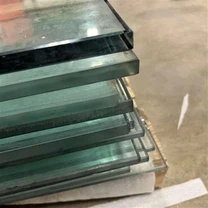
How does the thickness of the glass substrate affect the performance of the mirror? This is a practical question that directly relates to mirror use. The thickness of the glass substrate mainly affects the mirror's mechanical stability, safety, imaging flatness, and durability, with common substrate thicknesses ranging from 2mm to 12mm for daily use.
- Mechanical stability and load-bearing capacity
- Thin substrates (2mm-4mm): Lightweight but poor rigidity. They're easy to bend, deform, or even crack when installed (e.g., large-size mirrors) or slightly impacted. Suitable only for small mirrors (like compact vanity mirrors) with low load-bearing needs.
- Thick substrates (6mm-12mm): High rigidity and strong load-bearing capacity. They won't deform easily, even for large mirrors (e.g., gym dance mirrors, wall decorative mirrors). This ensures stable installation and avoids damage from long-term hanging or slight collisions.
- Safety performance
- Thin substrates: When broken, they shatter into sharp, small fragments that are easy to cause cuts - safety risk is high, even if made into tempered mirrors.
- Thick substrates: Even non-tempered thick mirrors are less likely to break; if they do, the fragments are larger and heavier, reducing the chance of splashing. When processed into tempered or explosion-proof mirrors, thick substrates perform better in preventing injury (e.g., bathroom or public area mirrors often use 5mm–8mm thick tempered glass).
- Imaging flatness
- Thin substrates: Prone to bending due to gravity, installation stress, or temperature changes. This causes the mirror image to distort (e.g., a person's figure looks "stretched" or "curved").
- Thick substrates: Good flatness and are not easy to deform. They can maintain a smooth surface, ensuring the image is true-to-life without distortion, critical for scenarios requiring accurate imaging (e.g., vanity mirrors, gym mirrors).
- Durability and environmental adaptability
- Thin substrates: More sensitive to temperature and humidity changes. They may develop edge cracks or delamination with the reflective coating over time (especially in wet environments like bathrooms).
- Thick substrates: Better thermal stability and moisture resistance. They reduce the risk of coating peeling or edge damage caused by environmental changes, extending the mirror's service life.
- Practical selection reference
- Small mirrors (e.g., compact vanity mirrors): 2mm-3mm (lightweight and portable).
- Daily wall mirrors, bathroom mirrors (small-to-medium size): 5mm-6mm (balanced stability and cost).
- Large mirrors (e.g., gym, dance studio, full-body decorative mirrors): 8mm-12mm (ensures flat imaging and safe use).