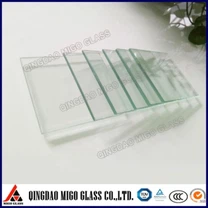
Heat-Soaked Glass:
Heat-soaked glass is a type of tempered glass that has undergone an additional heat-soaking process to reduce the risk of spontaneous breakage due to the presence of nickel sulfide inclusions. These inclusions can cause the glass to shatter unexpectedly over time.
During the heat soaking process, the tempered glass is heated to a specific temperature and held for an extended period of time. This allows any tempered glass units with nickel sulfide inclusions to break, reducing the risk of spontaneous breakage once the glass is installed. Heat soaking helps to ensure the long-term reliability and safety of the glass.

Heat Strengthened Glass:
Heat-strengthened glass is a type of glass that has been subjected to a heating and cooling process to increase its strength and resistance to thermal stress. Unlike fully tempered glass, heat-strengthened glass does not shatter into small, relatively harmless pieces when broken.
During the heat strengthening process, the glass is heated to a lower temperature compared to tempered glass and then rapidly cooled. This process induces compressive stress on the glass surface, making it stronger than regular annealed glass. Heat-strengthened glass is typically twice as strong as annealed glass and offers better resistance to thermal stress, making it suitable for applications where increased strength and thermal stability are required.
In summary, heat-soaked glass is tempered glass that has undergone an additional heat-soaking process to reduce the risk of spontaneous breakage, while heat-strengthened glass is glass that has been heated and cooled to increase its strength and resistance to thermal stress.