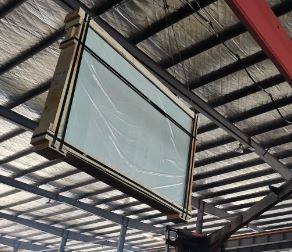
The packaging of float glass is usually in the form of packagings such as assembly racks and wooden boxes. Due to the need for customers to provide deposits to manufacturers, and long capital turnover cycle, high management and maintenance costs, long-distance transport and export restrictions, time-and-effort, the use of assembly rack packaging, there are many problems so that its use is limited, accounting for only about 20% of the total market. Wood box packaging is the vast majority of manufacturers when supplying the packaging form, accounting for about 80% of the total market. Wood box packaging in the industry accounted for a very large proportion, but this packaging method also has shortcomings: First, the use of more wood, consumption of a large number of forest resources; All processes are more easily damaged by improper operation of glass, such as glass injury, nail damage, etc. , in addition, will also cause the strength of the wooden box reduced, poor stability and other phenomena. In view of the above situation, the industry has taken more measures on glass packaging, such as: optimizing the structure of the wooden box, selecting wood materials and filling materials, reasonable nail selection, pay attention to the reinforcement of key parts, or the use of metal skeletons, effectively increase the strength and stability of the wooden box, in order to achieve reasonable savings in wood. These measures are still being further improved and explored. And float glass bare sheet packaging is a good way to solve the current problem, there are some manufacturers to implement the glass naked process.