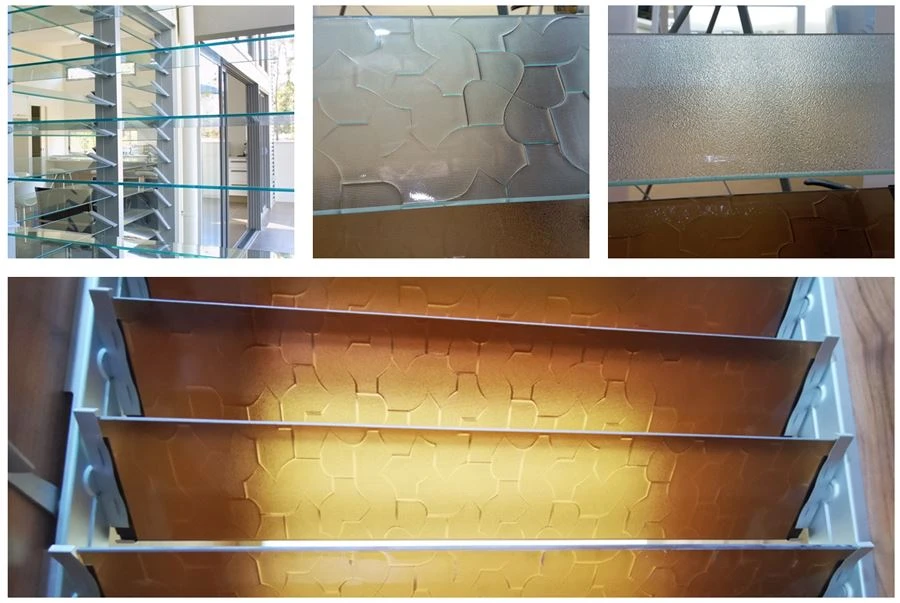
Glass louver windows have good permeability, and the blades can be made of different types of glass such as transparent, frosted or embossed to present different visual effects. Glass shutters can also be used in place of glass curtain walls, which not only overcomes the defect that the curtain wall cannot be opened but also maintains crystal clarity. Glass shutters have been widely used in building corridors, storage rooms, toilets, bathrooms and other parts.
The glass shutter is a window structure in which several glass blades are fixed on the frame at the same angle and in parallel. It is mainly composed of a frame, strip glass blades, blade clips and glass installation materials. According to whether the blades can be rotated within a certain range, glass shutters can be divided into movable shutters and fixed shutters. The blade gap of the movable shutter can be adjusted or closed to play a role in blocking the wind. This form of the shutter is generally used in the small rooms of living units such as bathrooms, toilets, and storage rooms. The blade I of the fixed shutter is fixed on the frame at a certain angle, and the blade gap cannot be changed. It is generally used in the corridor of public buildings.

Construction of Glass Louver Windows:
Generally speaking, glass shutters consist of a frame, strip glass blades, blade clips and glass mounting materials.
(1) FRAME. The frame of the glass shutter is different from the general window structure. There is no groove or slot for glazing, but a row of equally spaced holes is reserved on one or both sides of the vertical support (mullion) for fixing. blade. The horizontal support (transom) has no special function, but only increases the strength of the frame. The support should be slender and strong enough, not too thick, otherwise, it will waste materials and affect the visual effect.
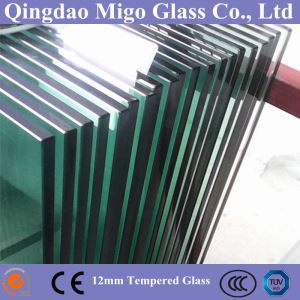
(2) GLASS BLADE. The glass blade is the core of the glass shutter, which is a long strip of glass. Its aspect ratio (that is, the ratio of the long side to the short side) is generally above 4.0. The long side of the blade is generally exposed, and it is also wrapped with a thin metal sheet. The short sides of the blades are fixed to the frame by blade clips. Since there are many types of glass, the glass blades also have different functions and decorative effects with the different types of glass used. For example, the outdoor scenery can be clearly seen through the colorless and transparent glass blades; when the heat-reflective coated glass is used, the sunlight transmittance can be reduced, thereby reducing the indoor temperature; when the opaque frosted glass is used, it can increase the concealment of the interior, and at the same time make the interior light soft and quiet. No matter what kind of glass the blade uses, as long as there is a risk of human impact, the exposed edge should be chamfered to prevent human cuts. If necessary, tempered glass or laminated glass can be used.
(3) BLADE CLIP. The function of the blade clamp is to fix the glass blade on the frame, one end of which has a groove for installing the glass, and the other end is a shaft-shaped convex, which matches with the reserved hole on the frame. The material of the blade clip is generally steel, aluminum or hard plastic.
(4) GLASS INSTALLATION MATERIALS. The glass mounting material acts as a gasket, preventing the glass from making hard contact with the blade clips, and at the same time resisting wind pressure. Glass installation materials for shutters generally include spacers and sealants. The spacer is made of PVC, which prevents the glass from making hard contact with the blade clip; the sealant plays the role of sealing and connecting, that is, preventing rainwater from entering the groove of the blade clip, and at the same time tightly connecting the blade clip and the glass in the Together.