


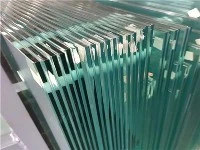


In the first half of this year, the float glass industry was trapped in the dual predicament of cost inversion and overcapacity, with "involutionary competition" intensifying, making industry rectification an urgent task.
Glass prices continued to decline in the first half of the year, falling to around 1,100 yuan/ton in June, and even below 1,000 yuan/ton in some areas of Hubei Province. The sluggish real estate market is the main reason for the weak demand. Although the demand for automotive glass and other products has increased, architectural glass accounts for more than 85% of the market, and its demand gap is difficult to fill. The downstream trade profit has plummeted from hundreds of yuan per ton to 10-20 yuan, and deep processing enterprises are also under pressure due to fewer orders and difficulty in collecting payments.
In contrast to the declining prices, costs remain high. In June, natural gas-fired production lines suffered losses of over 200 yuan per ton. The core issue is the mismatch between supply and demand: the daily melting volume has remained at 156,000-160,000 tons this year. Enterprises continue to produce despite losses due to high cold repair costs and fears of missing out on market opportunities, leading to continuous inventory accumulation in the first half of the year.
Against this backdrop, industry rectification is gradually advancing. The Shahe area is promoting the upgrading of fuel systems, increasing enterprise costs by 40-200 yuan/ton; the Guangdong Glass Industry Association has issued a self-discipline initiative to curb vicious competition. However, industry insiders believe that the current effect of environmental protection in reducing overcapacity has weakened. If only relying on market-oriented regulation, the industry may remain at the bottom for 5-10 years, and more systematic rectification measures are needed to solve the "involution" dilemma.


