In modern bathrooms, shower glass has become a defining design element. Frameless shower enclosures, sliding shower doors, and walk-in glass panels are widely used in residential and commercial projects because they create a clean, spacious look while allowing natural light to flow through the space.
However, aesthetics alone are not enough. Safety, durability, and compliance with international standards are essential when selecting shower glass. For builders, contractors, and distributors sourcing glass globally, understanding the major international safety standards for shower glass is critical to ensuring product quality and avoiding project risks.
This article explains the key standards used in different regions and what buyers should look for when purchasing tempered shower glass panels or shower door glass.
Why Shower Glass Standards Matter
Shower glass is classified as safety glass because it is installed in areas where people are frequently in close contact with the material. If ordinary glass were used, breakage could lead to severe injuries.
For this reason, most countries require tempered glass or laminated safety glass for shower enclosures.
International standards ensure that shower glass meets requirements for:
- Impact resistance
- Fragmentation safety
- Mechanical strength
- Thermal stability
- Manufacturing quality control
When shower glass complies with recognized standards, buyers can be confident that the material will perform safely in real-world bathroom environments.
Major International Standards for Shower Glass
Different regions use different certification systems, but the technical principles are largely similar.
1. ANSI Z97.1 (United States)
One of the most widely recognized standards in North America is ANSI Z97.1 – Safety Glazing Materials Used in Buildings.
This standard specifies testing methods for glass used in shower doors, bathroom enclosures, and other hazardous locations.
Key test requirements include:
- Impact testing using a pendulum system
- Breakage pattern evaluation
- Minimum strength requirements
Glass that passes the test must break into small, relatively harmless particles, which is a defining characteristic of tempered safety glass.
For contractors working in the United States or Canada, ANSI-compliant tempered shower glass is typically required.
2. EN 12150 (Europe)
In Europe, the primary standard for tempered glass is EN 12150 – Thermally Toughened Safety Glass.
This standard defines the requirements for:
- Tempered glass production
- Flatness and dimensional tolerances
- Fragmentation testing
- Surface quality
EN 12150 is commonly applied to frameless shower doors, shower enclosures, and bathroom glass partitions.
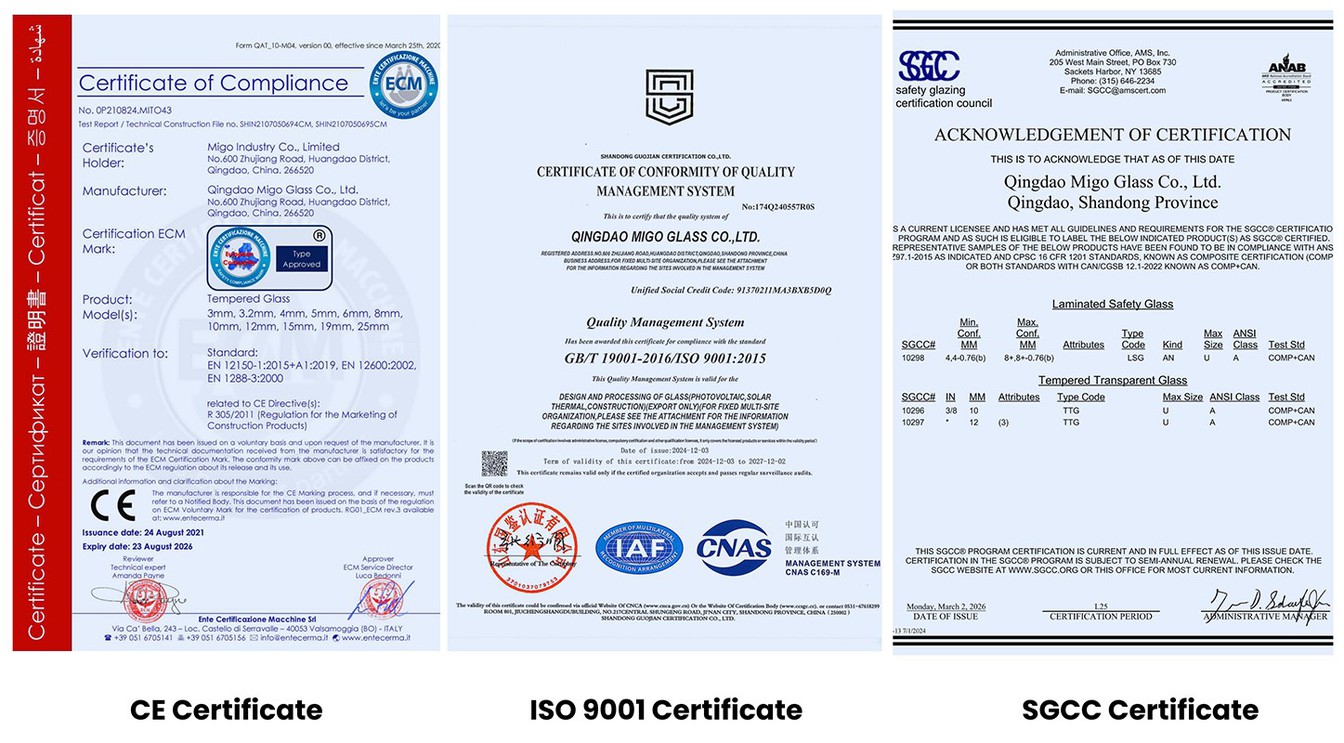
For projects in the EU, suppliers must provide glass that meets CE certification requirements based on this standard.
3. AS/NZS 2208 (Australia & New Zealand)
In Australia and New Zealand, AS/NZS 2208 – Safety Glazing Materials in Buildings governs safety glass used in architectural applications.
The standard includes:
- Impact performance testing
- Fragmentation behavior
- Labeling requirements
This certification is often required for custom shower glass panels used in residential construction and hospitality projects.
4. SGCC Certification (North America)
In addition to ANSI testing, many manufacturers obtain certification from the Safety Glazing Certification Council (SGCC).
SGCC certification ensures:
Third-party verification of safety glass performance
Continuous manufacturing audits
Product traceability through permanent markings
For distributors and importers, SGCC-certified tempered glass is a reliable indicator of product compliance in North America.
Key Technical Requirements for Shower Glass
Although standards vary by region, most share similar technical expectations.
1. Tempered Safety Glass
Most shower doors use fully tempered glass, typically in thicknesses such as:
- 8 mm tempered shower glass
- 10 mm tempered shower glass
- 12 mm frameless shower glass
Tempered glass is approximately 4–5 times stronger than ordinary float glass.
When broken, it shatters into small granular pieces rather than sharp shards, significantly reducing injury risk.
2. Fragmentation Safety
One critical test measures the fragmentation pattern after breakage.
High-quality tempered glass must produce many small fragments within a defined area, confirming that internal stress distribution is correct.
Poorly tempered glass may break into larger dangerous pieces, which is why strict testing is necessary.
3. Impact Resistance
Impact testing simulates real-world accidents such as:
Someone slipping in the shower
A door being slammed
Accidental body impact
The glass must withstand these forces without catastrophic failure.
4. Edge Quality and Processing
Because shower glass panels are frequently handled and installed without frames, edge processing is extremely important.
Typical requirements include:
- Polished edges
- Corner radius finishing
- Hole drilling accuracy for hardware
Proper edge processing reduces the risk of stress concentration and spontaneous breakage.
Choosing a Reliable Shower Glass Manufacturer
For contractors and distributors sourcing internationally, compliance alone is not enough. Manufacturing capability and quality control also play a major role in product reliability.
An experienced supplier should provide:
- Certified tempered shower glass
- Custom glass fabrication for shower enclosures
- Strict quality inspection
- Secure packaging for international shipping
At MIGO GLASS, we manufacture tempered shower glass panels, frameless shower door glass, and custom bathroom glass solutions that meet major international safety standards.
Our production system ensures:
- Compliance with ANSI, EN, and other global safety standards
- Advanced tempering technology
- Precision glass processing for shower hardware installation
- Stable supply for large construction projects
These capabilities allow contractors, importers, and distributors to source high-quality shower glass for residential and commercial bathroom projects worldwide.
Future Trends in Shower Glass Safety
As bathroom design continues to evolve, safety glass technology is also advancing.
New developments include:
- Tempered laminated shower glass for higher impact resistance
- Anti-explosion safety films
- Nano-coated easy-clean glass surfaces
- Smart glass for privacy control
These innovations aim to improve both bathroom safety and user experience, particularly in hotels, high-end residential projects, and luxury developments.
Conclusion
Understanding international shower glass standards is essential for anyone involved in sourcing, installing, or distributing bathroom glass products.
Key certifications such as ANSI Z97.1, EN 12150, and AS/NZS 2208 ensure that tempered shower glass panels meet strict safety and performance requirements.
By working with experienced manufacturers like MIGO GLASS, buyers can ensure that their shower doors, frameless enclosures, and custom bathroom glass panels meet global safety standards while delivering the modern design and durability that today's construction projects demand.