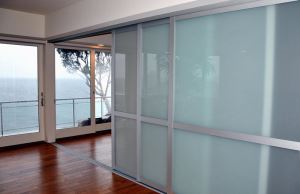
Acid-etched glass is a type of decorative glass that has been treated with a specialized chemical process to create a frosted or matte finish on its surface. This process involves exposing the glass to hydrofluoric acid or other similar chemicals that dissolve the top layer of the glass, leaving behind a uniform, satin-like finish.

The acid etching process creates a frosted effect on the glass that diffuses light and provides privacy. The degree of opacity of the frosted effect can be customized to meet the specific needs of the project, ranging from a light, almost transparent frosting to a more opaque effect that provides complete privacy.
Acid-etched glass is a popular choice in interior design due to its ability to add privacy, beauty, and elegance to any space. Some common applications of acid-etched glass panels in interior design include:
- Doors: Acid-etched glass can be used in both interior and exterior doors to add privacy while still allowing natural light to pass through. They can also be used to create a decorative entryway.
- Partitions: Acid-etched glass is often used as partition walls in offices, hotels, and other commercial spaces to create privacy while still maintaining an open feel.
- Shower enclosures: Acid-etched glass is a popular choice for shower enclosures because they add privacy and elegance to the bathroom.
- Windows: Acid-etched glass can be used in windows to add privacy while still allowing natural light to enter the room.
- Cabinets: Acid-etched glass can be used as cabinet doors to add a decorative element to the kitchen or bathroom.
- Furniture: Acid-etched glass can be used as table tops or shelving in furniture pieces to add a unique and elegant touch.
- Lighting: Acid-etched glass can be used in lighting fixtures to create a soft, diffused light that is ideal for creating a calming and relaxing atmosphere.
Overall, acid-etched glass is a versatile material that offers many advantages and benefits, making it an excellent choice for anyone looking to add privacy and sophistication to their space.