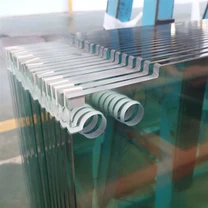
In vegetable production,a rule of thumb states that 1% more light equals 1% more potential pro -duction.The greenhouse covering therefore should allow the sunlight to enter the greenhouse as mu -ch as possible for a maxium potential photosynthesis.Just like every constructive element in the gree -nhouse,glass is evaluated carefully for its light translucency and its return on investment,if not more. two types of greenhouse glass can be distinguished;horticultural float glass and diffuse glass.The typi -cal glass that is used for glass greenhouse is the horticultural float glass.It is a transparent glass with a high light admittance to ensure sufficient light in the greenhouse.The other type of glass is on the ri -se and installed in many new greenhouse projects.Diffuse glass has an etching or a structure which c -hanges the properties of the surface of the glass,which can be benefitial for the crops within the gree -nhouse.
The iron contents of greenhouse glass also have impact on the overall light translucency.The so c -alled"low-iron"glass is more transparent than regular glass.Another way of allowing more light pass through the glass,is by applying AR-coatings.These permanent anti-reflection coatings reduce the refl -ection levels of sunlight on the glass,which results in more light in the greenhouse.
In many cases the greenhouse glass is tempered for safety reasons.This makes the glass 4 to 7 time -s stronger than the defalult form of float glass.Also,in case of glass breakage,it shatters into a large a -mount of small pieces which can prevent human injury and crop damage.
The size of the glass panes with which the greenhouse is glazed are dpendent of the aluminum system,the trellis-span and the post-distance.